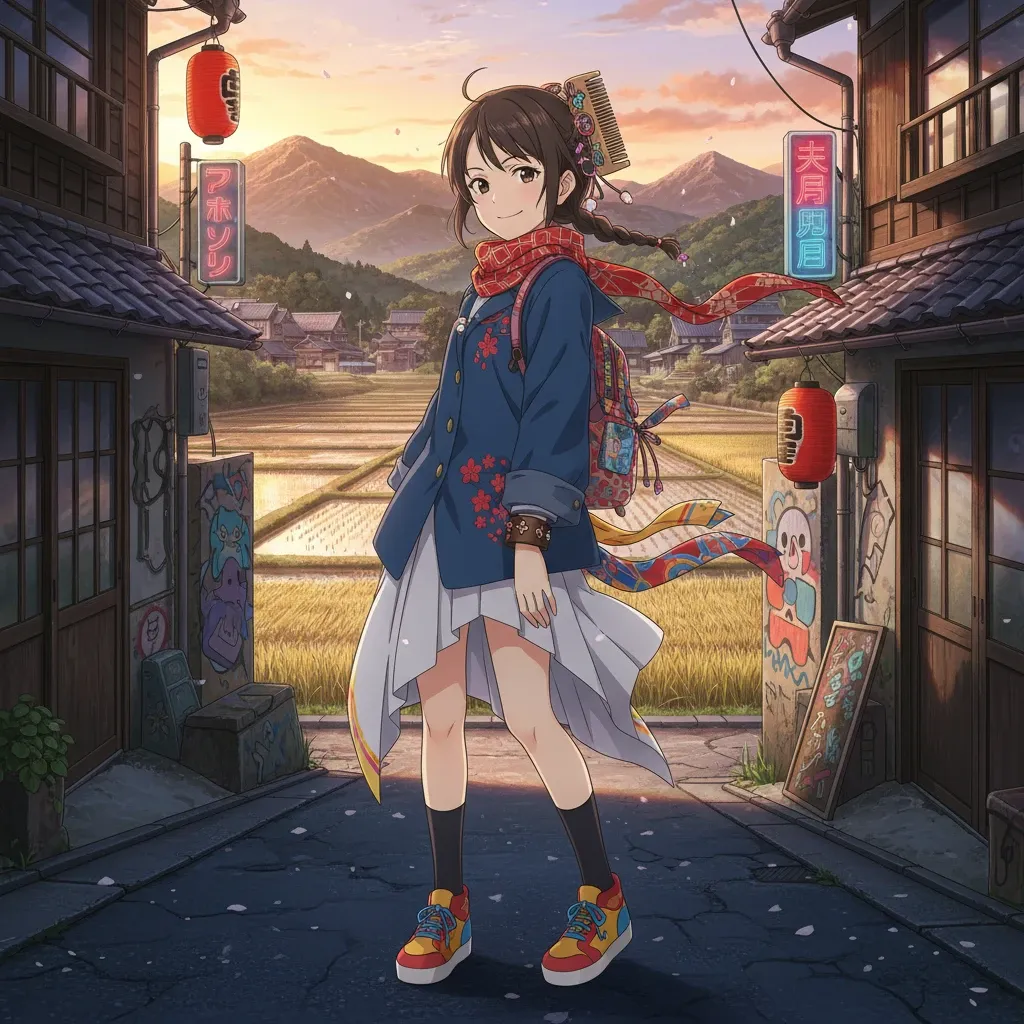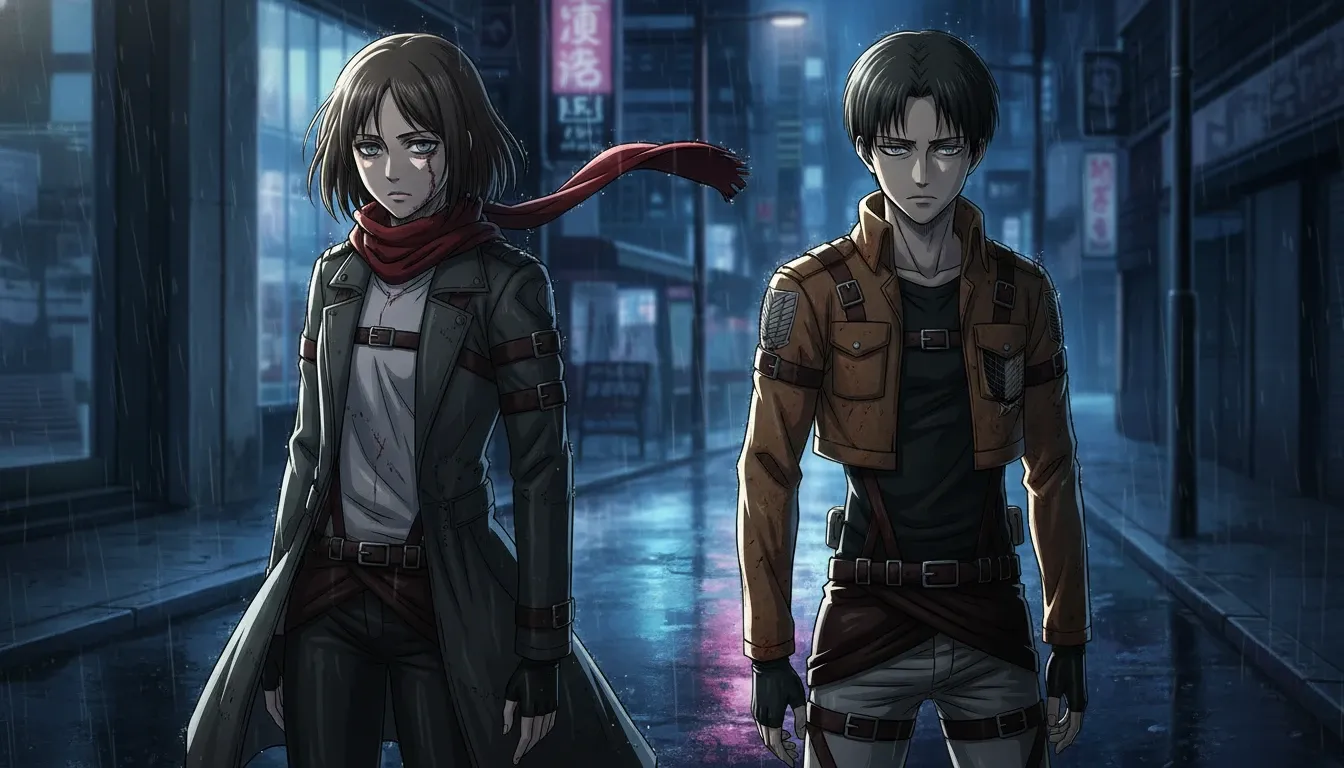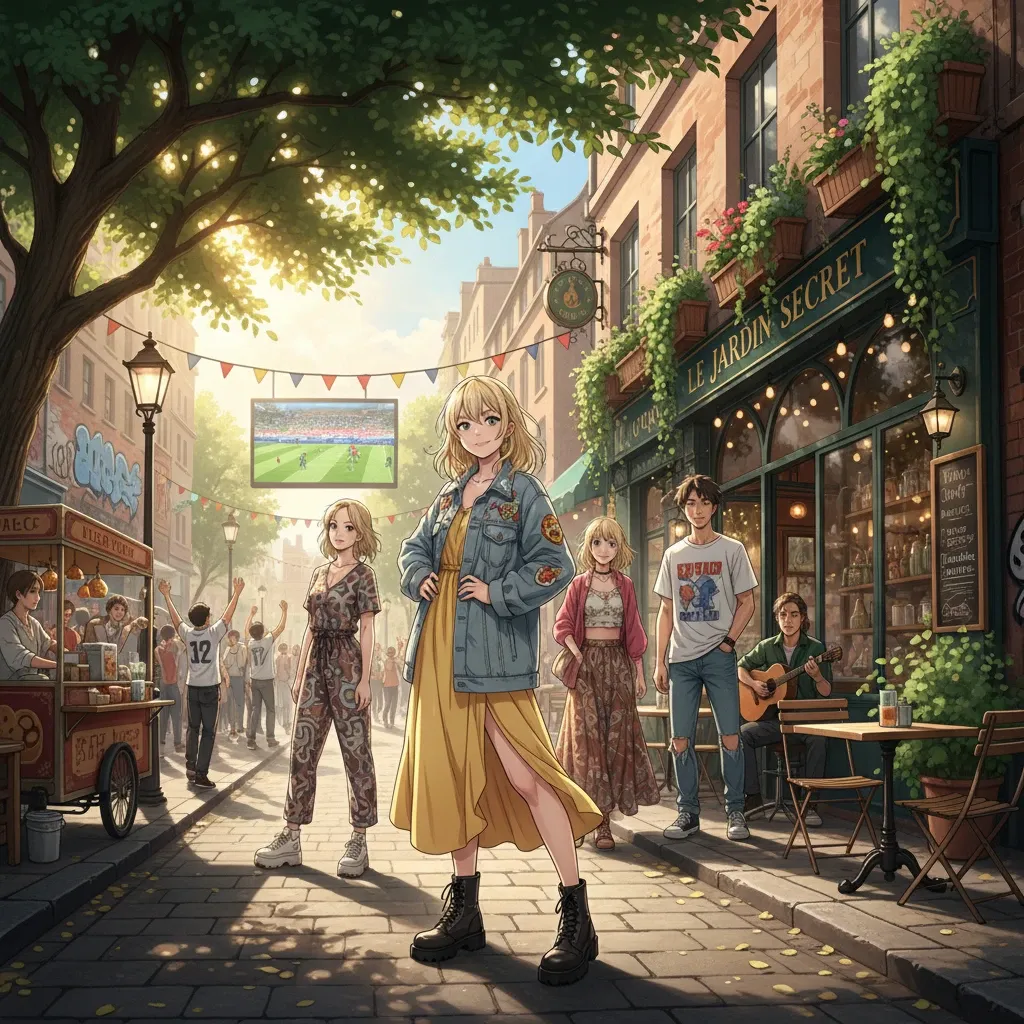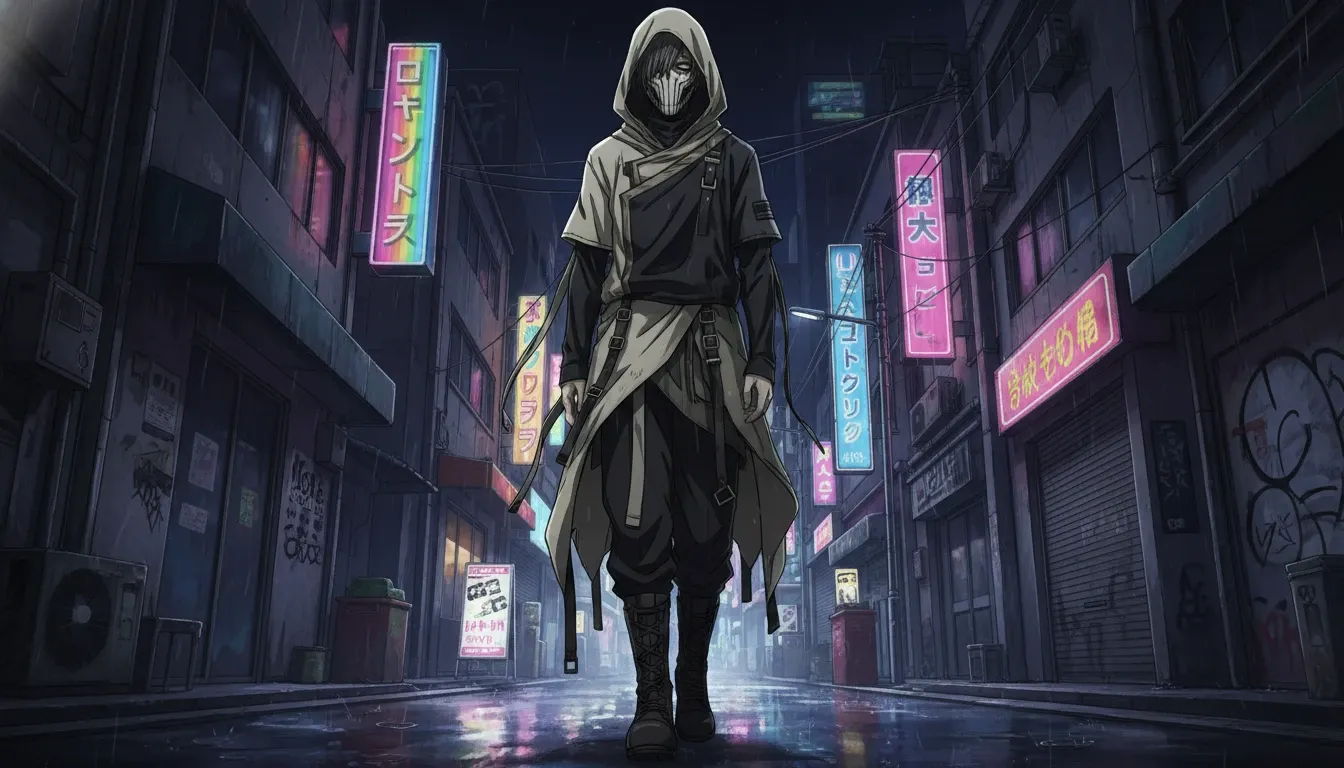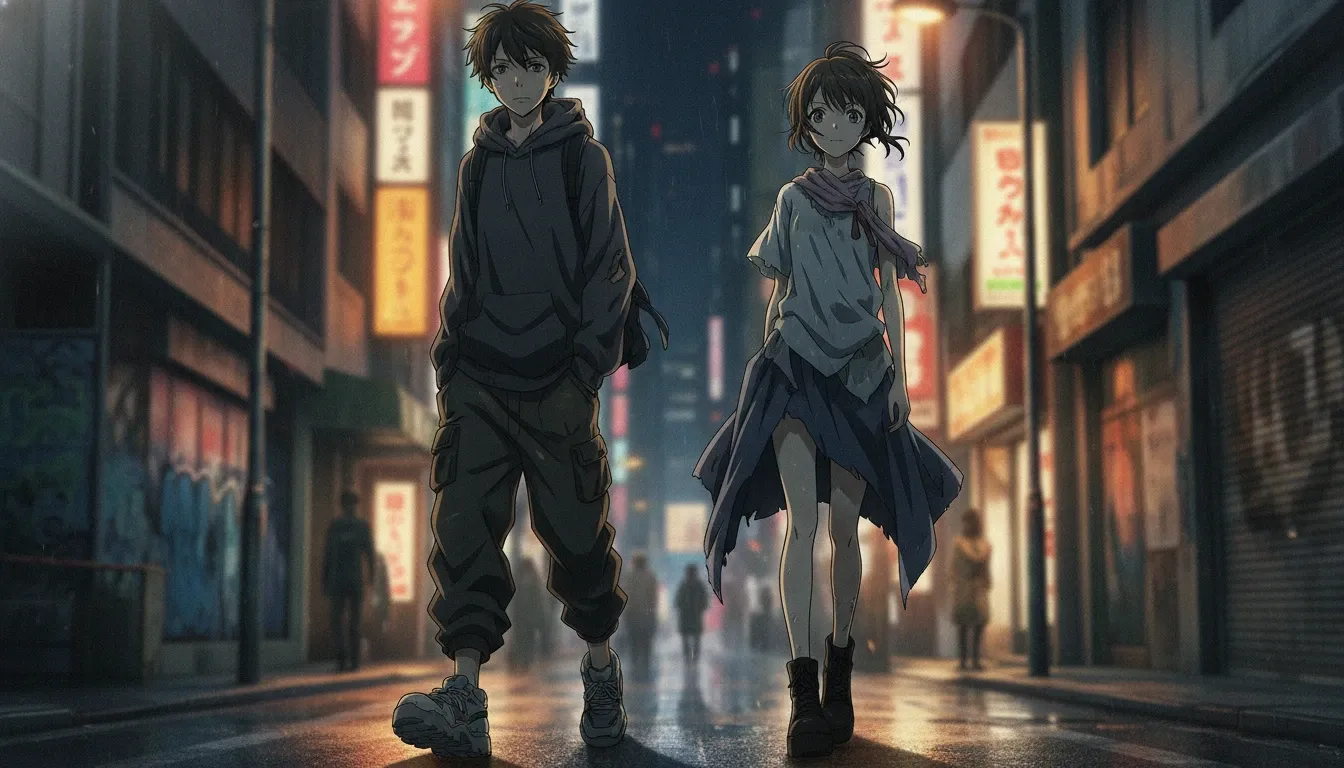
Taki and Mitsuha reimagined in urban streetwear and avant-garde silhouettes, blending anime aesthetics with a gritty city backdrop. Taki wears scuffed sneakers and a slightly oversized hoodie, showing creases from carrying weight. Mitsuha sports a frayed sleeve and layered outfits, hinting at rain-damp cotton. Sodium streetlights cast a warm glow, illuminating their determined expressions as they navigate a bustling city street, capturing the raw essence of urban life with grainy textures and dynamic poses
The Day I Swapped Silver Halide for Sensor Noise
I still remember the sound my old film body makes when it’s happy: that dry, mechanical thwack of the shutter, followed by the soft rewind that feels like a zipper closing on a secret. Last month, that sound stopped being my default. My lab shut down—quietly, almost politely—and I got shoved into digital the way you get shoved onto a moving subway when you’re not looking. Now I carry a mirrorless camera that boots up with a tiny electronic sigh, like it’s disappointed in me.
A week ago I was standing under a flickering station light, half-listening to two teenagers argue about whether “film is making a comeback” (they said it like it’s a seasonal drink), and I almost interrupted them. Almost. I didn’t. I just felt this little hot pulse of irritation in my throat, the kind that says: you have no idea what you’re romanticizing.
And because the world is cruelly poetic, the first thing I wanted to photograph after this forced conversion wasn’t “real life” at all—it was Taki and Mitsuha, reimagined not as clean anime nostalgia, but as two bodies moving through a city in effortless streetwear and daring avant‑garde silhouettes. Not cosplay. Not merch. Something more like: what would they wear if they had to survive the same sidewalks I do, under the same sodium streetlights, with the same wind that tastes faintly of exhaust and convenience-store fried food?
I’m going to be blunt: the “Your Name” look most people cling to is too polite. Too neatly folded. Too museum-safe. Streetwear is supposed to scuff. Avant-garde is supposed to make you slightly angry before it makes sense.
And—wait, this is where I hesitate a little—because part of me knows “polite” is also a kind of comfort. People want to keep certain stories clean. I get it. I just don’t want it.
Grain, Sweat, and the Refusal to Look “Clean”
Digital taught me something in the first week: it will let you be lazy. It will let you fix your hesitation later. Film never did. Film punished you immediately—at the counter, at the lab, in the moment you realized you’d underexposed a face and now the face is gone forever.
Typing that, my neck’s a little tight, like it remembers long hours hunched over contact sheets. Maybe that’s melodramatic. Maybe it’s just bad posture. But the body keeps receipts.
So when I imagine Taki and Mitsuha in streetwear, I refuse the glossy, catalog-perfect version. I want wear on them. I want creases at the elbow where someone’s been carrying too much. I want that almost-sour smell of rain drying on cotton. I want Mitsuha’s sleeve hem to be slightly frayed like she keeps catching it on the corner of a train seat. I want Taki’s shoes to look like they’ve been dragged across half the city because he missed the last train and walked.
Effortless streetwear, to me, doesn’t mean “simple.” It means unforced. The kind of outfit you don’t adjust in reflective windows because you already know how it sits on your body… or because you’ve stopped believing the window is telling you the truth.
Mitsuha: Soft Utility, Tight Ritual
Mitsuha’s streetwear isn’t “cute oversized hoodie.” That’s the lazy answer. She’s ritual and tension. She’s tradition pressed into modern motion. I see her in:
- A cropped utility jacket in washed charcoal, the fabric slightly stiff like it remembers how it was folded in a warehouse.
- Wide, high-waisted trousers in a heavy cotton that swings like a bell when she turns, with a stitched crease that refuses to disappear.
- A thin inner layer—almost like a second skin—because she’s always bracing against the feeling that the world might shift under her.
And the key detail I can’t stop thinking about: she keeps one small cord—maybe braided, maybe red, maybe not even visible unless you’re close—tied through a belt loop. Not as a symbol for the audience, but because she needs it there. Like photographers who keep a dead roll of film in their bag for luck. (Yes, I do that. It’s stupid. It works.)
I know, I know: a cord in a belt loop isn’t revolutionary. It’s nothing. It’s everything. That’s the annoying part.
Taki: Fast Layers, Hard Edges
Taki is velocity. He’s the kind of guy who dresses like he has five minutes, because he does. But the silhouette? That’s where the avant-garde begins to leak in:
- A long, sleeveless outer layer—technical fabric, almost matte, hanging like a modern tabard.
- A boxy tee with a dense collar that holds its shape after too many washes.
- Cargo pants, but not the mall kind: sharply paneled, with asymmetrical pockets that look designed by someone who hates symmetry on principle.
And I want him to wear a bag that’s slightly too big, not because it’s trendy, but because he carries things—sketchbook, pen, maybe a cheap disposable camera he keeps buying out of guilt.
(That last part is a projection. Obviously. But I’ve met enough people who carry guilt like an accessory that I’m comfortable making the leap.)
The Avant-Garde Turn: When Clothing Starts Arguing Back
Here’s where I get opinionated in a way that will probably annoy someone: most “avant-garde” interpretations people do for anime characters are just black fabric and dramatic lighting. That’s not avant-garde; that’s a costume department running out of time.
Avant-garde silhouettes have to disturb the body’s default proportions. They should change how you walk. They should introduce a small inconvenience that becomes a kind of philosophy.
When I reimagine Taki and Mitsuha in daring silhouettes, I’m not thinking runway theatrics for the sake of it. I’m thinking of the specific kind of strange that looks normal after you stare for ten seconds—like a city noise you only notice when it stops.
And then there’s the pause that always follows that thought, the one I don’t like admitting: maybe we need the disturbance because otherwise we’d have to face how easily we settle into whatever shape we’re given…
Mitsuha: Volume as Weather
Mitsuha gets a coat that behaves like a portable climate. A high collar that brushes the jaw. Sleeves with a slight balloon, not cute—protective. The hem uneven, like it was cut while someone was remembering a dream. Underneath, a skirt‑over‑pants layering that makes purists mad, but makes sense when you see her move: the fabric catches air, then releases it, like breathing.
I want a single piece of hardware on her—one industrial clasp that looks overbuilt for its job. Because she’s carrying something heavier than what people see.
And yes, this is where I get overly sentimental: the clasp makes me think of my grandmother’s old trunk, the one that always smelled faintly of camphor and metal. Nothing inside it was glamorous. Everything inside it mattered.
Taki: Brutal Geometry, Tender Hands
Taki wears a jacket with a shoulder line that doesn’t match his body. One shoulder slightly extended, like armor that never got resized. The back panel drapes, but the front is cropped—contradiction stitched into wearable form. He looks like someone trying to be decisive while living inside uncertainty.
And I keep coming back to the hands. Taki’s hands in “Your Name” are always doing something—reaching, grabbing, sketching, writing. So I put him in sleeves that are just a little too long, forcing him to push them back. That gesture becomes part of the character.
Small, repeated gestures are where people actually live. Not in the big symbolic moments. In the sleeve push. In the collar tug. In the way you check your pocket for something that isn’t there anymore.
Two Cold Details I Learned the Hard Way (That Change How I Imagine Them)
I’m going to drop a couple details here that aren’t the kind you get from a mood board. You only get them by being annoying for years.
And I should audit myself as I say this, because “cold details” can easily turn into fake authority if you’re not careful. So: these are not universal laws. They’re scars. They’re what I saw, what I heard, what stuck.
The Zipper Problem That Isn’t a Myth (And Isn’t Just “Bad Craft”)
A friend of mine worked briefly with a small Tokyo pattern room years ago. They tried an experimental streetwear coat with an exposed zipper that curved around the body like a question mark. Looked incredible. In the real world, the zipper buckled every time the wearer sat down, and the teeth chewed through the facing fabric within two weeks. They scrapped it, but the lesson stuck: the more “effortless” the garment looks, the more likely the chaos is hidden inside—taped seams, concealed plackets, reinforcing stitches no one applauds.
Is that specific coat a famous “failed prototype” that changed the industry? No. That would be too neat. It didn’t become legend. It became a quiet rule in one small room: don’t make the zipper fight the body. (If anything “taught designers,” it was thousands of tiny failures like that, not one dramatic story.)
So when I picture Mitsuha’s coat looking calm and draped, I imagine the inside as a battlefield of structure.
The Argument About “Avant-Garde” That Never Really Ends
There’s this quiet, annoying argument among stylists I’ve overheard in cramped back rooms: some insist Japanese avant-garde is “dead” because the mainstream copied the silhouette language—big, asymmetrical, black, layered—without the underlying intent. Others argue it’s finally free, because it escaped the museum label.
I can’t verify “dead” or “free” the way you verify a spec sheet. It’s not that kind of claim. But I can verify the vibe: the fatigue is real. The eye-rolls are real. The way people say archive like it’s both a prayer and a threat.
I’m on the rude side: I think avant-garde isn’t dead, it’s just tired of being photographed like a sacred relic. It wants to be worn to the convenience store at 2 a.m. It wants cigarette ash on it. (I don’t smoke anymore, but I still remember the smell in the darkroom: fixer, damp paper, and someone’s cheap tobacco.)
Side Note: I Miss the Waiting, and It Affects How I Style Them
Side note—because I can’t help myself—I miss waiting for negatives. I miss the suspense, the delayed shame, the delayed joy. Digital gives you certainty too fast. That changes how you shoot, and honestly, how you imagine clothing. When you know you can delete mistakes, you start accepting outfits that only work from one angle.
And this is where I have to admit something that sounds petty: sometimes I miss the discipline more than I miss the look. The way film forced you to commit. Digital doesn’t force commitment; it offers options. Options are a kind of softness, and softness isn’t always kind.
Film made me respect garments that read from any angle, under ugly light, mid-step, half-obscured by someone passing in front of you. That’s the streetwear standard I apply to Taki and Mitsuha.
If their reimagined looks can’t survive fluorescent train lighting and a sudden gust that flips a coat open like a mouth, then it’s not real. It’s just a picture of clothes.
How I Would Shoot Them Now That I’ve Gone Digital (Against My Will)
I’d shoot them in motion, not posed. I’d put Mitsuha near a crosswalk where the wind funnels between buildings and makes fabric tell the truth. I’d put Taki under a pedestrian bridge where the light is ugly and greenish—because if the silhouette still looks intentional there, it’s earned it.
I’d underexpose slightly and pull the shadows up later, even though that’s the kind of trick film would slap me for. I’d keep the color palette restrained: asphalt gray, washed navy, that almost-brown black you get when fabric has lived a life. Then I’d allow one controlled wound of color—maybe a thread, a cord, a lining flash—because “Your Name” is, whether people admit it or not, a story about a bright thing surviving in a muted world.
(And yes, I can hear the digital purists already: just expose properly. Fine. Maybe I’m still grieving. Let me be a little wrong.)
The Point I’m Not Pretending to Hide
I don’t want Taki and Mitsuha dressed like icons. I want them dressed like survivors of coincidence, two people who keep missing and finding each other in a city that never apologizes.
Effortless streetwear gives them cover. Daring avant-garde gives them shape. Together, they become believable in my world—the world where shoes get dirty, trains are late, sleeves fray, and the camera in my hands no longer smells like metal and oil but still, somehow, still catches the moment right before everything changes.
And yes, I’m still mad about being forced into digital. But maybe that’s why I’m drawn to this reimagining: because it’s the same story, really. A self you loved gets replaced by a new version, and you spend a while insisting it isn’t you—
—and then one day, without any dramatic music, you find yourself outside a convenience store, fluorescent light flattening everything, hands cold around a camera that feels too light… and you realize you’re still looking. Still chasing the same disappearing light.
What scares me (and, honestly, what keeps me going) is the question I can’t close: when the light changes again—because it will—what version of me will be the one who lifts the camera?