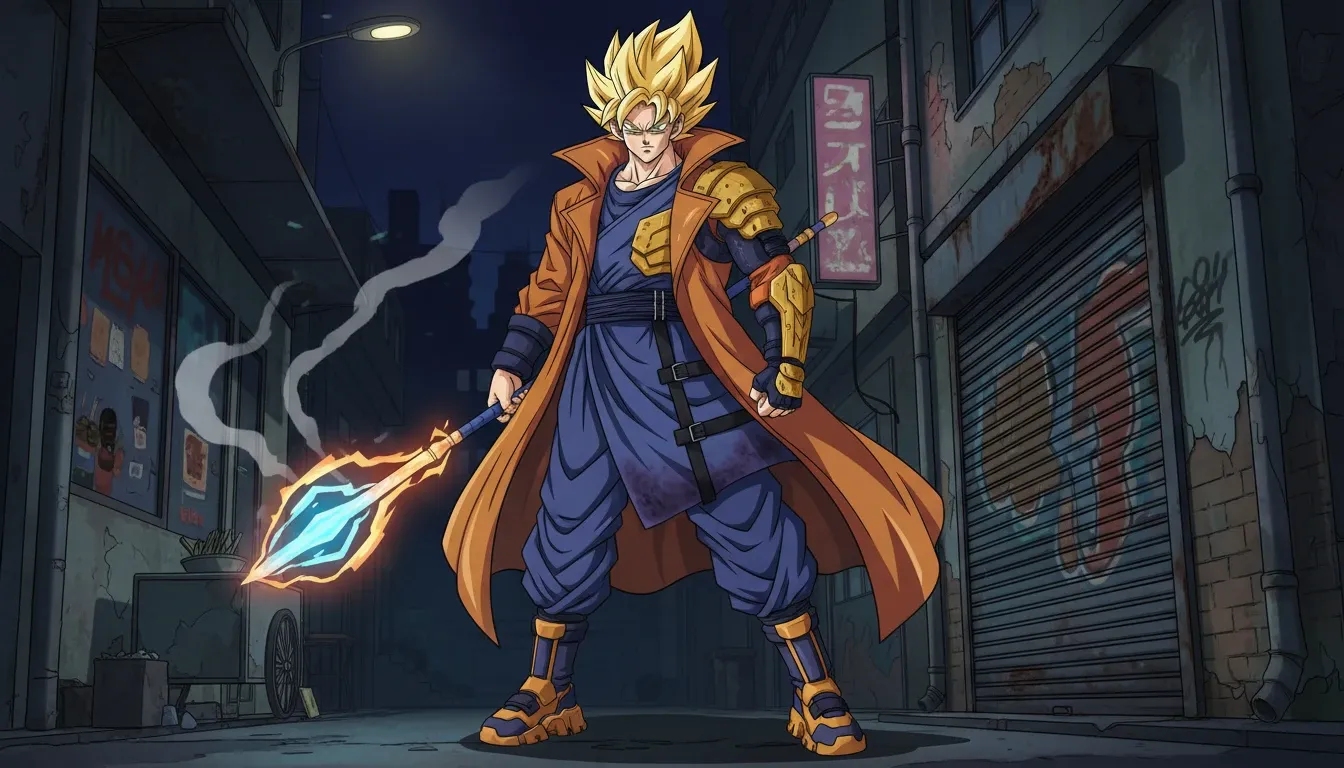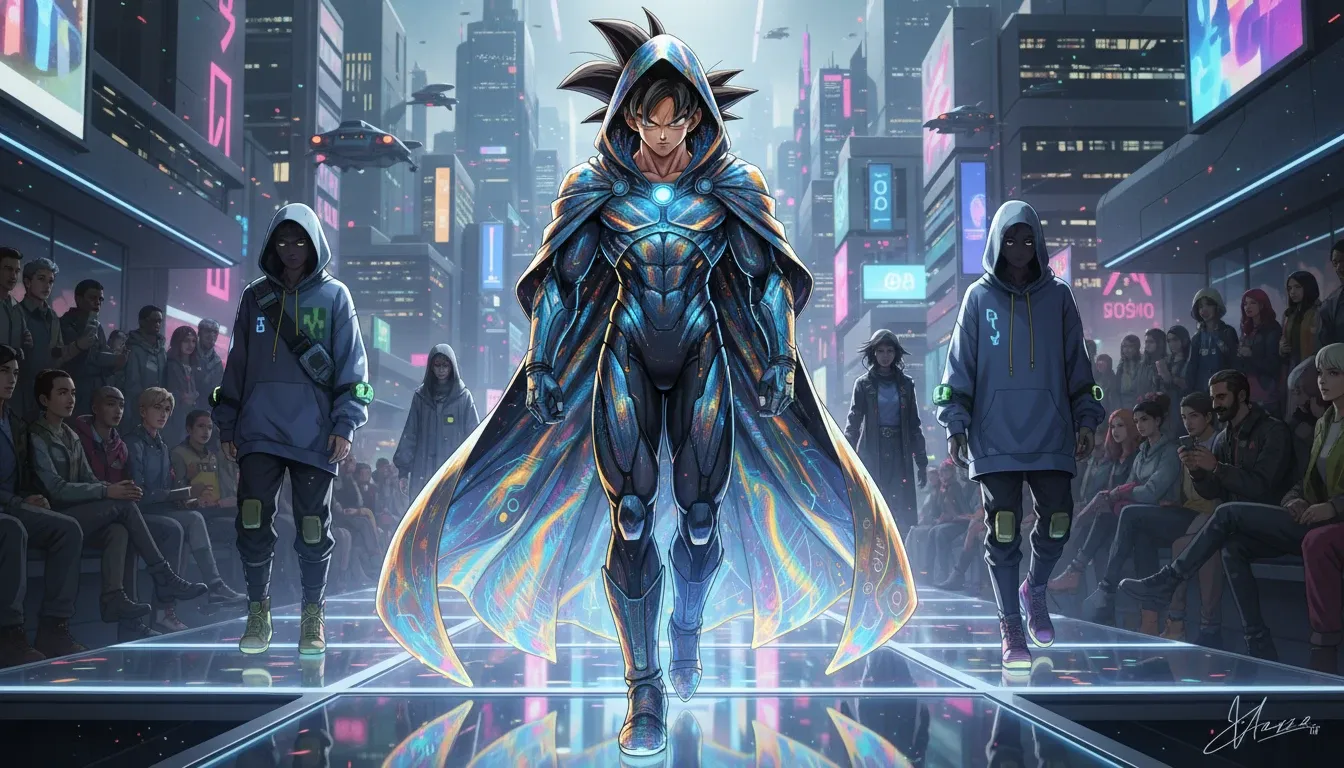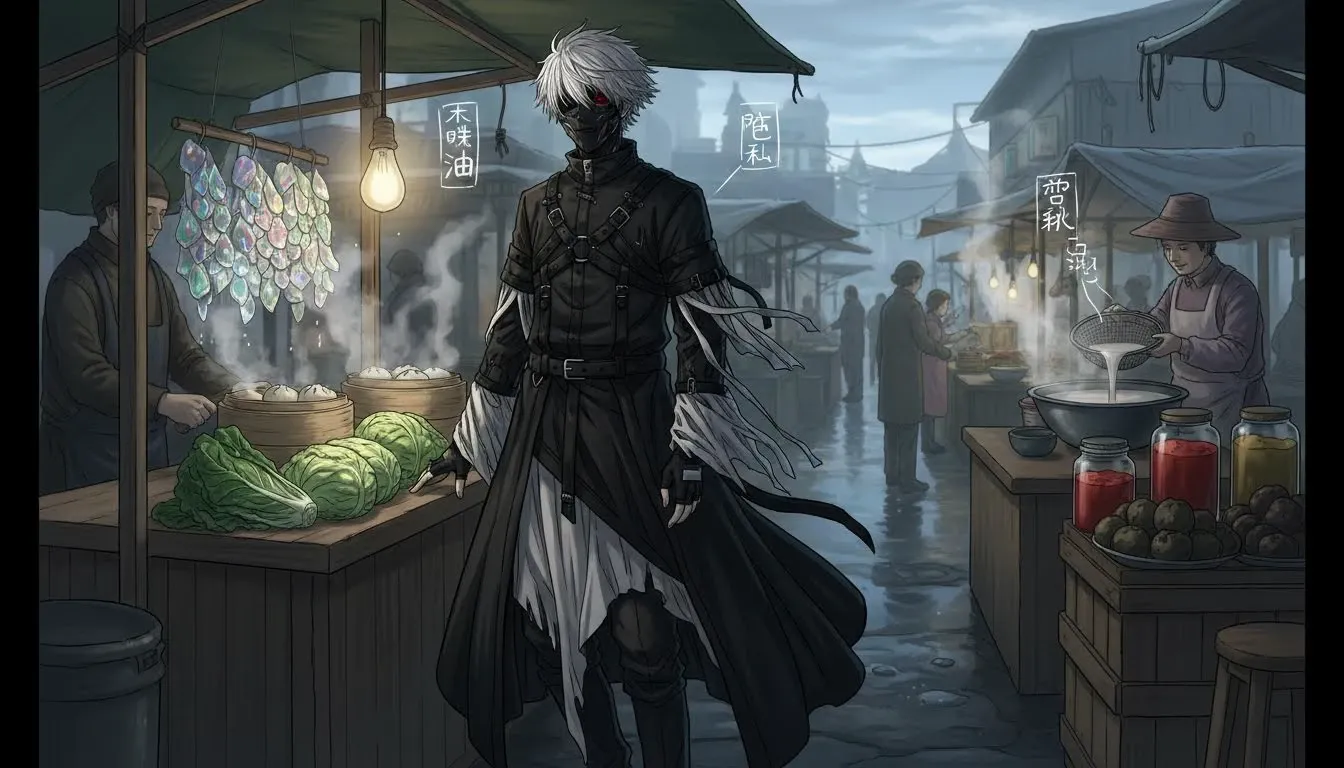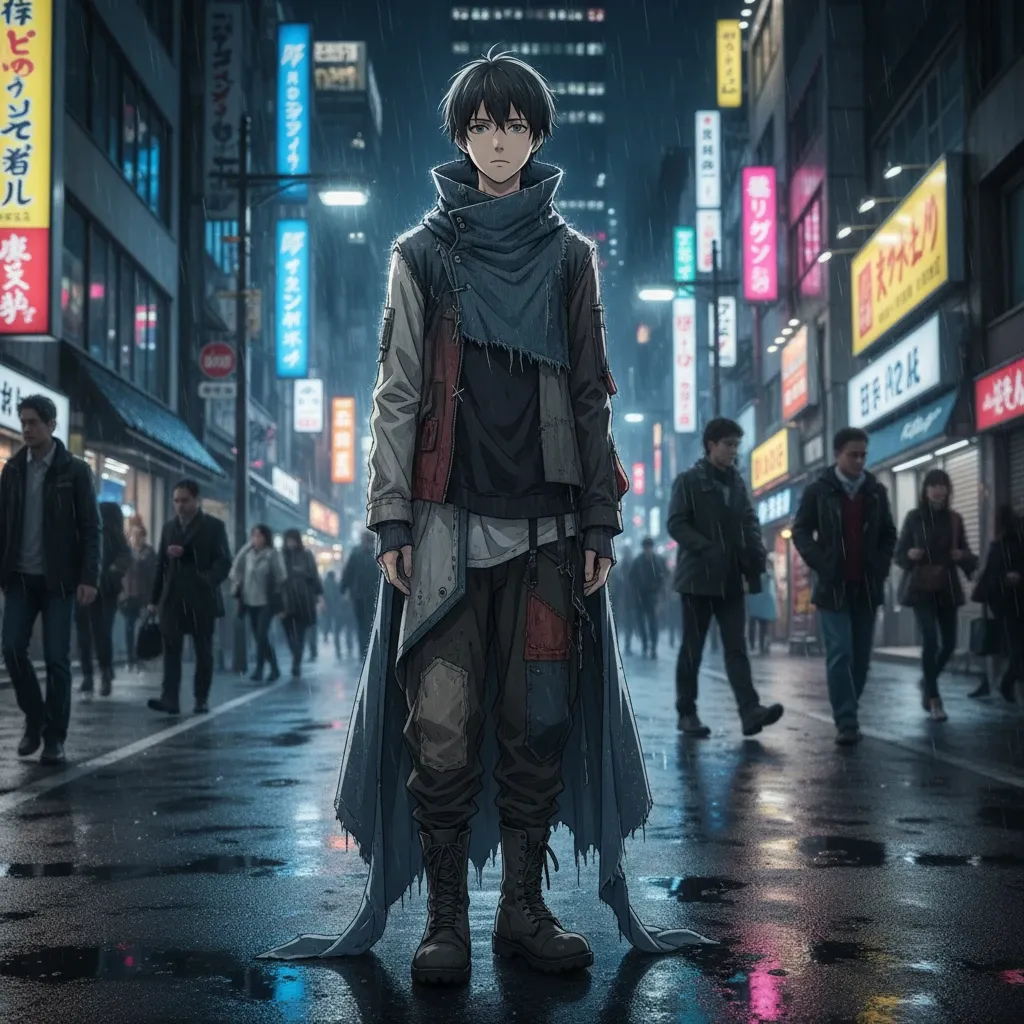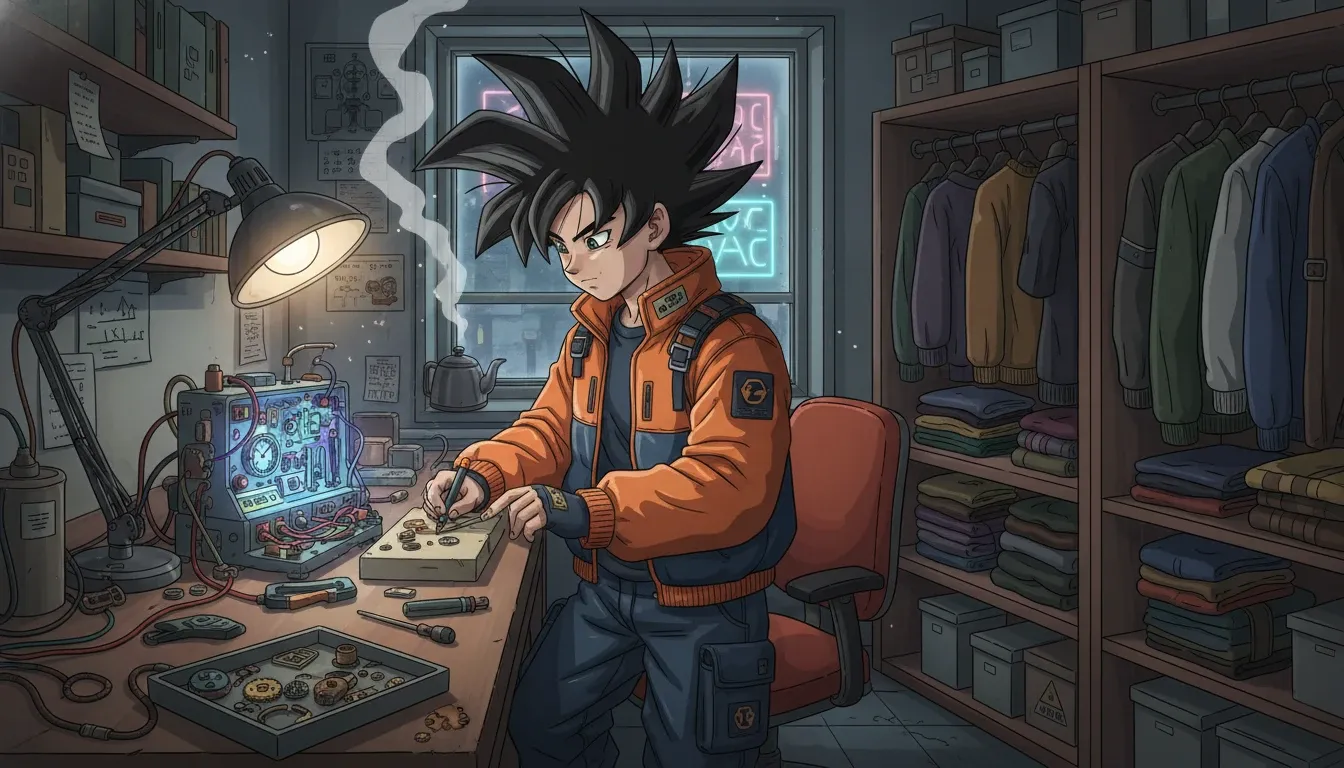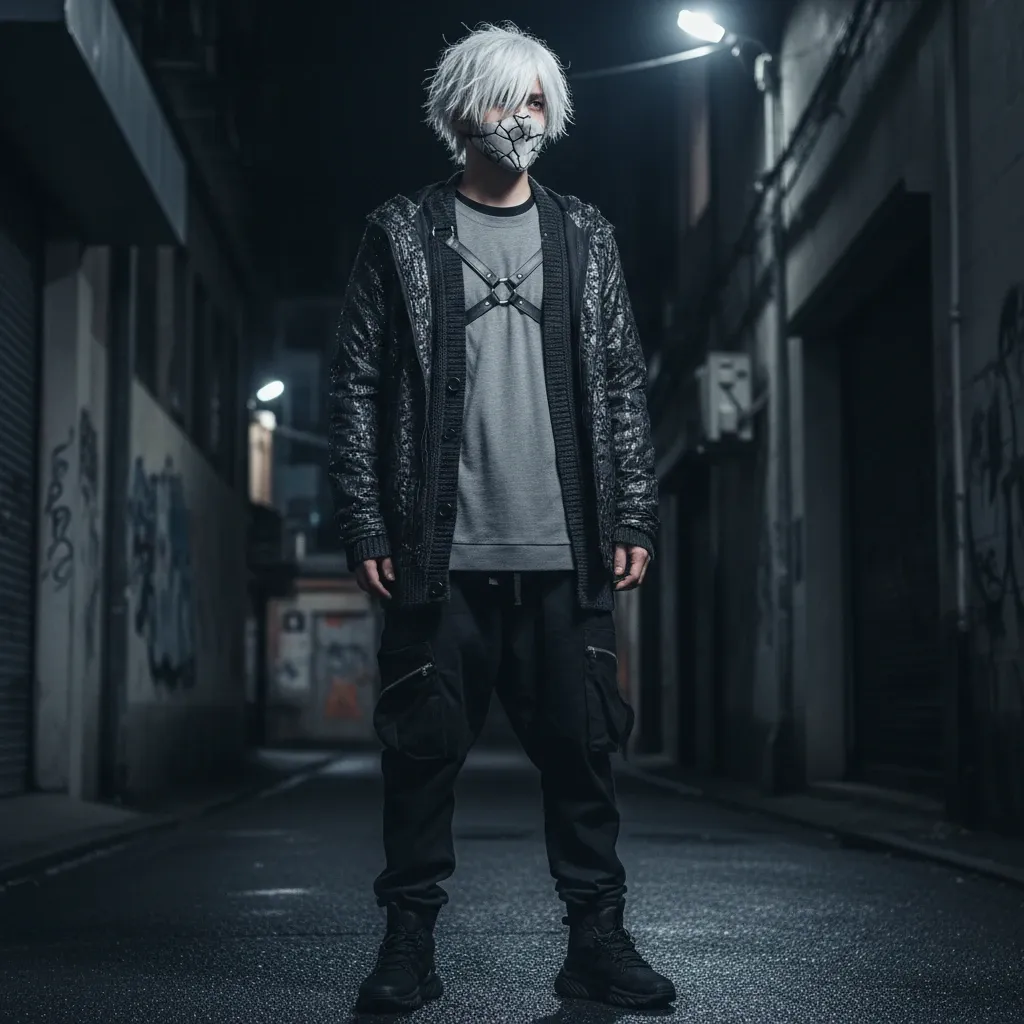
A streetwear outfit inspired by Kaneki Ken, combining soft cottonized hemp jersey layers in muted tones with avant-garde dark elegance. The base layer is a relaxed long-sleeve, topped with a textured outer shell resembling wet pavement. Incorporate a harness-like detail subtly layered over a cardigan. Set against a dimly lit urban backdrop, with harsh white lighting casting shadows, enhancing the mood of rebellion and contradiction. The character has white hair, a thoughtful expression, and embodies a sense of awareness of their altered self, blending anime aesthetics with realistic fashion elements
I Quit Fast Fashion With a Box Cutter in My Hand
The last week I worked in fast fashion, my fingers smelled like hot polybag plastic and warehouse dust. I was standing under merciless white lighting, slicing open cartons of “newness” with a box cutter that kept snagging because the tape was too glossy, too eager to pretend it was clean. Someone above me said “Kaneki vibes” as a joke—white hair, black mood, a little violence-for-style—and everyone laughed like it was harmless.
It wasn’t harmless. It was a confession.
Kaneki Ken isn’t a mascot for trend cycles. He’s the sound of a body being rewritten against its will, the shame of needing to eat what you swore you’d never touch, the rage of learning you were always somebody’s inventory. When streetwear borrows him as a graphic, it often keeps the hair and the mask and discards the horror. I left because I couldn’t keep selling horror as decoration.
I’m a designer now in the unglamorous, ink-stained trenches of sustainable textiles. I still love streetwear. I just want it to stop lying.
The Rebellion Isn’t the Hoodie—It’s the Layering Logic
Streetwear “rebellion” usually gets framed as loud: oversized silhouettes, distressed hems, aggressive prints. But Kaneki’s rebellion is quieter and nastier. It’s the decision to build a self out of contradictions. Casual layers meeting avant-garde dark elegance isn’t an aesthetic moodboard—it’s a survival technique.
I design Kaneki-inspired outfits the way I design my own exit from fast fashion: by refusing the single-story garment.
A soft base layer that behaves like innocence—then a second layer that restricts, binds, or shadows it. A casual tee that feels like cotton on the collarbone, then an outer shell that catches light like wet pavement at midnight. A cardigan that reads “civilian,” then a harness-like detail that reads “don’t touch me.”
The point is not to cosplay trauma. The point is to let clothing admit it: we are never one thing.
Casual Layers: The Parts That Want to Pass as Human
The “human” layer should feel almost embarrassingly normal: a jersey long-sleeve, a relaxed sweatshirt, a knit with a neckline that sits friendly on the throat. But if you’re doing Kaneki honestly, you don’t let it stay perfect.
I use cottonized hemp jersey sometimes—its handfeel is soft, but it keeps a faint dry rasp, like paper that’s been handled too much. It wrinkles with a stubborn memory. It won’t play the slick, forgettable role fast fashion demands.
And I cut the inner layers with tiny disobediences: a shoulder seam nudged forward, sleeve length that just misses the wrist bone, a hem that doesn’t sit level when you walk. Nothing theatrical. Just enough to make the body aware of itself.
Because Kaneki is always aware of his body—too hungry, too altered, too watched.
Avant-Garde Dark Elegance: The Parts That Refuse to Be Innocent
Then comes the “ghoul” layer, and I mean that in the most tender way: the layer that stops apologizing.
Dark elegance isn’t simply black. It’s black that behaves differently under light: matte swallowing brightness, satin reflecting it like a knife edge, waxed cotton looking like it’s been rained on, then dried, then rained on again.
I’m obsessed with fabrics that have a moral complexion—materials that look expensive and haunted, but aren’t built on cheap exploitation.
Here’s a detail most people never see because it happens before the garment exists: I test dye recipes on narrow strips and leave them in a window for weeks. Some “deep blacks” bloom into a tired brown-purple under sun, and you only notice it when you fold the strip and the crease line reveals the original shade. That fade is a betrayal, and it’s exactly the kind of betrayal fast fashion hides by pushing product out before time can tell the truth.
Kaneki is time telling the truth.
The Mask Problem (And Why I Refuse the Easy Version)
Everyone wants the iconic mask. It’s the shortcut: slap a toothy grin on neoprene and call it edgy. But I’ve handled too many petrochemical foams that off-gas like a new car interior—sweet, toxic, headache-inducing—to romanticize it anymore.
Also, there’s a weird industry argument that almost never leaves the sample rooms: some licensors quietly prefer masks as detachable accessories because they spike units-per-transaction. It’s not art, it’s basket size. That’s why you see “Kaneki-inspired” collections built around add-ons—mask, gloves, straps—rather than garments that carry the narrative in cut and cloth.
I design against that.
If there’s a mask reference in my work, it’s structural: a high funnel collar that can fold up and obscure the mouth, or a scarf panel integrated into the neckline so it doesn’t become another piece of plastic you buy, toss, and replace. The mouth-covering is there when you need it, gone when you don’t—like control returning to the wearer.
Rebellion shouldn’t require an extra SKU.
An Unpretty Truth From My Old Job: The Failed Prototype That Haunted Me
There was a prototype in my fast fashion days that never made it to market, and I still think about it because it accidentally told the truth.
We were developing a “tactical” hoodie: layered-look sleeves, strap details, a mock neck. The first sample looked incredible in photos, but after two hours of wear the inside started pilling like a cheap carpet, and the straps twisted into ropes that chafed the skin raw. The factory suggested switching to a cheaper brushed fleece to hit margin. It would pill faster, but it would feel softer for the first try-on—the moment that sells.
That prototype died because returns were projected to be too high.
What bothers me is not that it failed. What bothers me is why it failed: not because it hurt people, but because it threatened the numbers.
Kaneki’s story is what happens when the system only cares about the numbers.
My Sustainable Fix Isn’t “Better Materials.” It’s Better Intentions Made Visible.
Sustainable streetwear fails when it tries to look guiltless. I don’t want guiltless. I want accountable.
So I build Kaneki’s duality into the physical decisions:
- Layered modularity without disposable gimmicks: inner tee + detachable collar piece that buttons in, not velcroed plastic patches that fray and shed.
- Natural-dark palettes that aren’t performative: iron-rich blacks, charcoal overdyed on hemp-cotton, and bio-based water repellency that feels like a waxy whisper instead of a slick chemical shout.
- Hardware that ages like a story: recycled metal snaps that dull over time, the way a character dulls from repeated wounds.
Another inside-baseball detail: I ask mills for abrasion test results on the exact finish, not the base fabric. Some suppliers will proudly show a Martindale score that belongs to the greige cloth, then apply a coating that cracks after a season. If you’re building “dark elegance,” cracking can look cool—until it starts shedding micro-flakes you find on your palms like black dandruff.
I learned to demand the boring documents. Rebellion is sometimes paperwork.
The Outfit I Actually Want You to Wear
Not a costume. A choice.
The Human Start
A slightly oversized long-sleeve in hemp-cotton jersey, off-black that reads soft rather than severe. The neckline sits close enough that you feel it when you swallow. The sleeves bunch at the forearm like you’ve been pushing them up and forgetting to pull them down.
The Hunger Layer
A sleeveless outer piece—part vest, part armor—in densely woven organic cotton with a dry, almost papery hand. Inside seams bound cleanly so it doesn’t scratch when worn bare-armed. The armholes cut high, a little restrictive, reminding you that freedom isn’t free.
The Elegance Cut
Wide trousers in a dark fluid weave—Tencel blend or regenerated cellulose—so they move like smoke but hold a crease like intention. A slight taper that makes the shoe feel chosen, not accidental.
The “Mask” Without the Mask
A collar panel integrated into the vest: fold it up, it frames the jaw. Fold it down, it becomes a drape that catches light on the clavicle. No plastic grin. No cartoon teeth. Just the power to hide or reveal.
If you want an accent, make it honest: a single red bartack at a stress point, like a small wound you’ve decided not to conceal.
I Still Love Streetwear. I Just Don’t Trust Its Amnesia.
Streetwear is best when it remembers where it came from: necessity, community, friction with authority, self-made codes. When it turns Kaneki into a seasonal graphic, it commits the same sin my old job committed daily—mining pain for margin.
The rebellion I’m after is slower, more stubborn, and harder to photograph in a product grid. It’s casual layers that feel like real life—soft, repeatable, washable—colliding with avant-garde dark elegance that refuses to be consumed as a joke.
Kaneki Ken isn’t “dark aesthetic.” He’s a reminder that transformation hurts, that hunger changes you, that a body can be both weapon and home.
I don’t design to sell you a character. I design to let you keep your own.