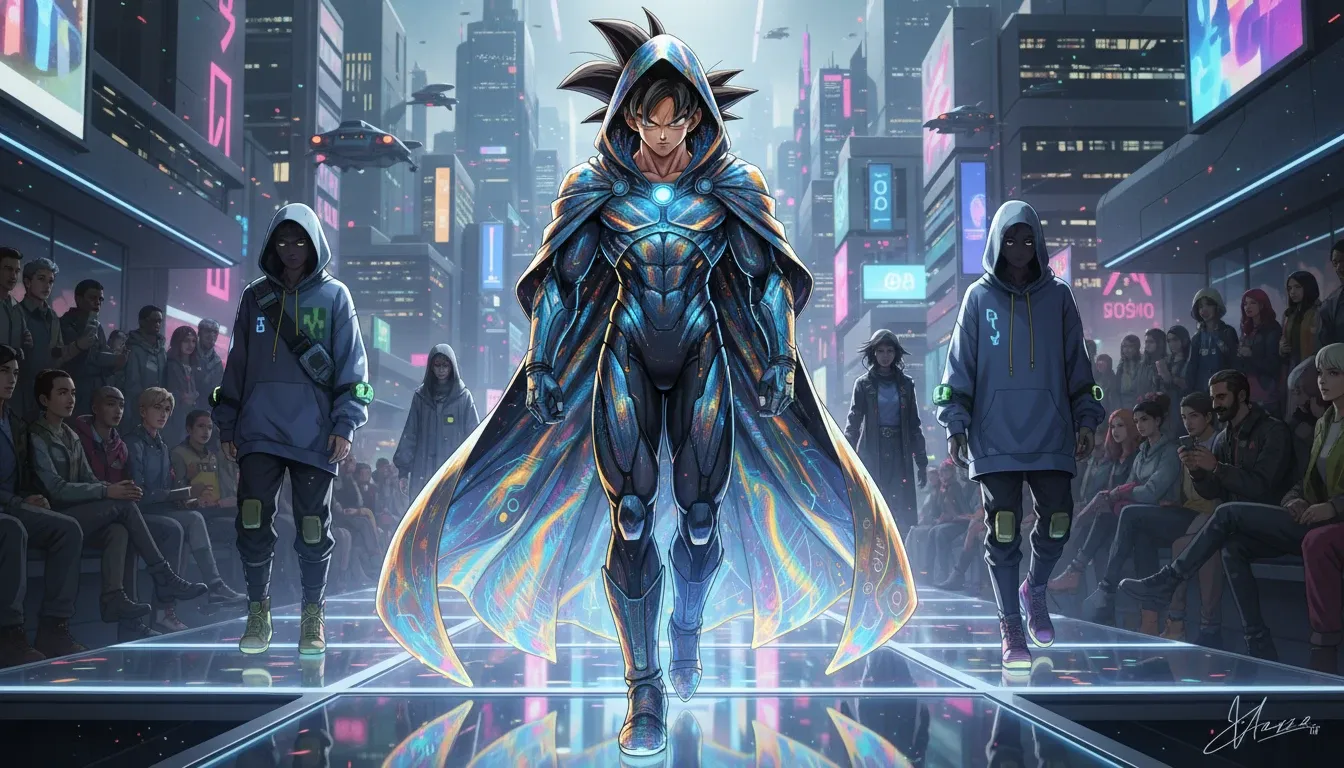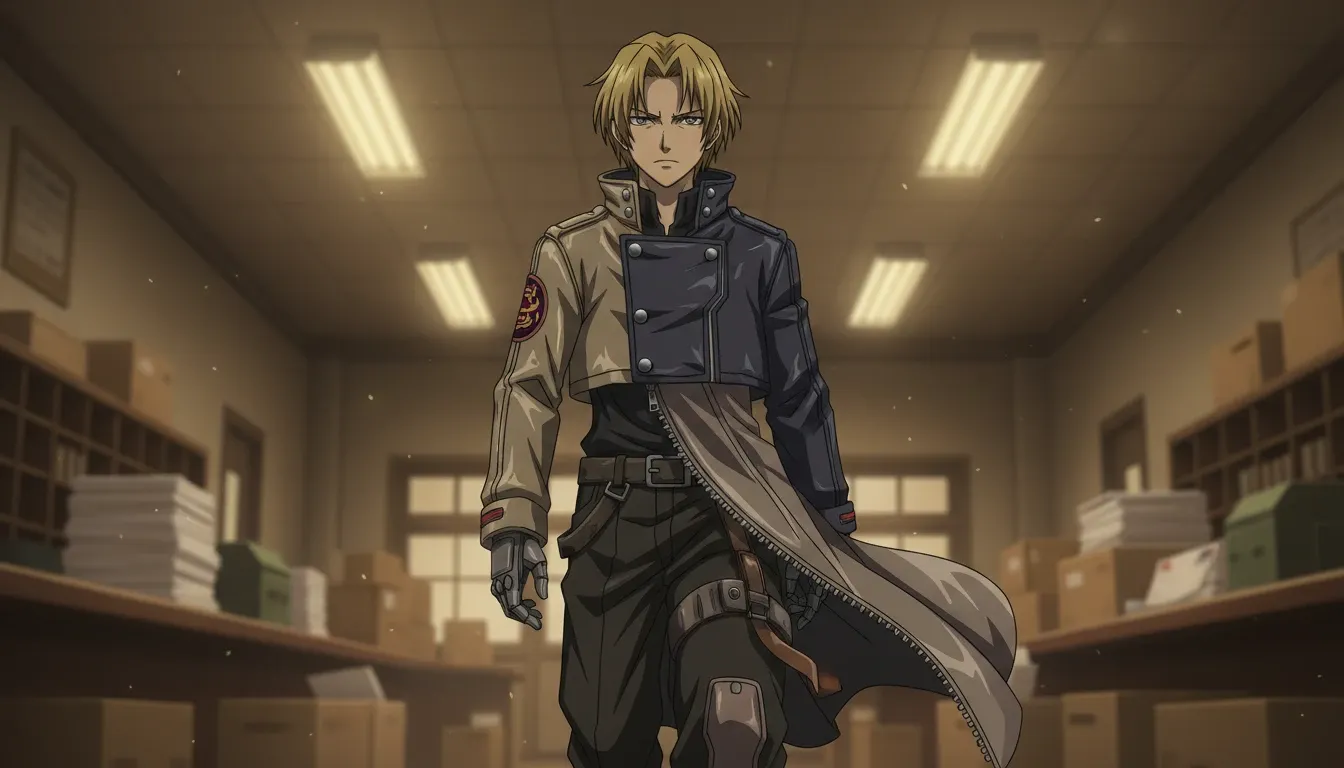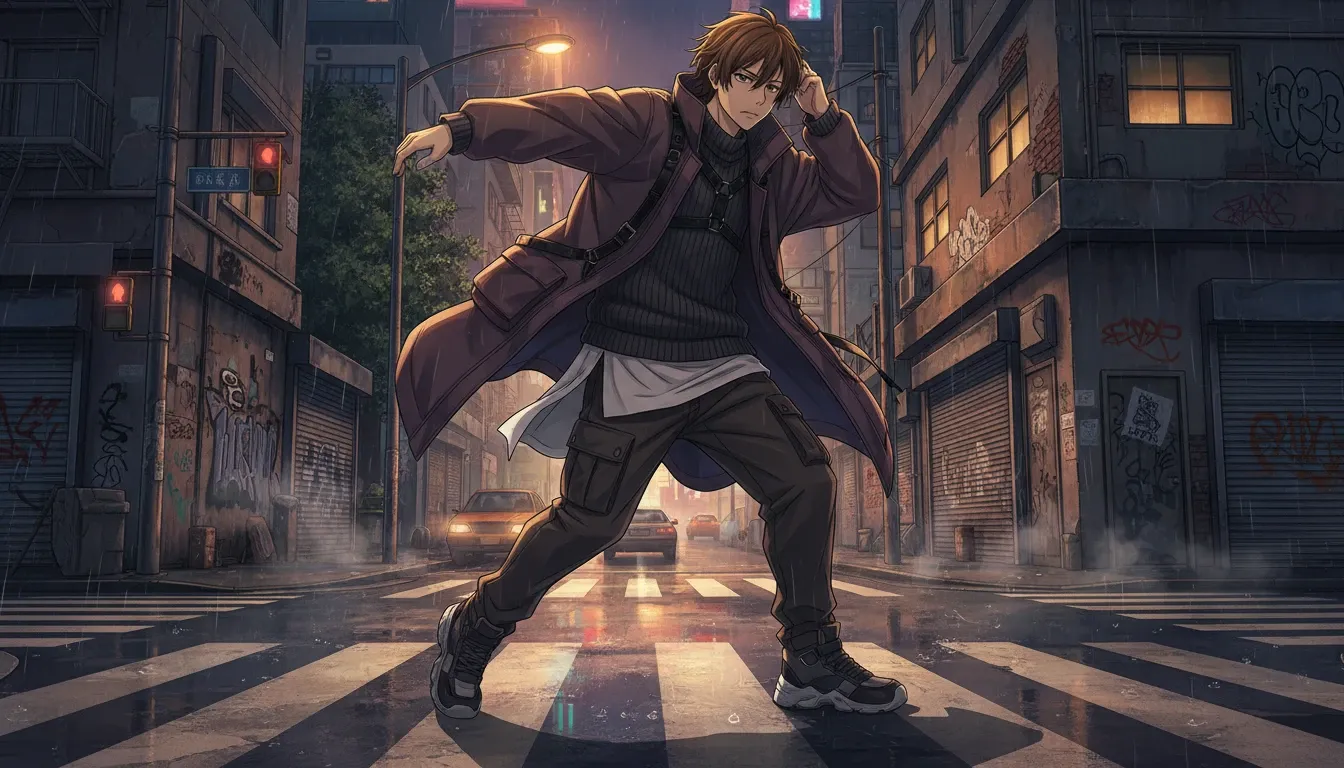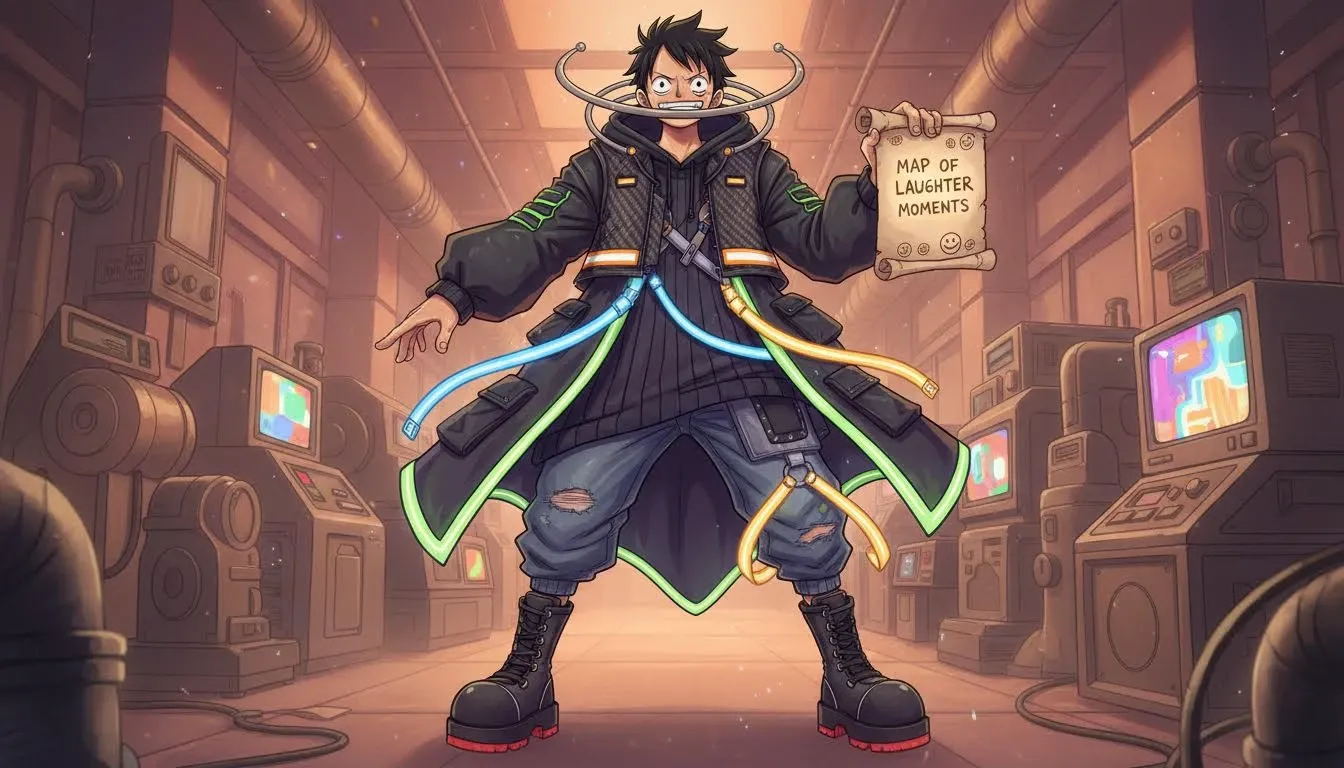
Anime-inspired Luffy in streetwear, avant-garde silhouettes, bold layering, neon accents. Textured fabrics: rigid circular collar, asymmetrical hem, layered jackets, tech knit, oversized hoodie. Setting: retro museum with warm dust, cathode monitor glow, nostalgic ambiance. Details: playful proportions, layered outfits that breathe and echo, unexpected pockets, fluorescent trims that surprise, a handwritten map of laughter moments, industrial materials in the background
When I say “One Piece Luffy Streetwear Fusion With Avant Garde Silhouettes Bold Layering And Neon Edge,” I don’t want it to become a disposable “concept look.” What I want is a way of behaving: like Luffy, whose spirit is elastic, whose posture breaks rules, whose grin spreads wide against the world’s sharp edges. But then again, do I even have the right to say this? I’m typing this on a still-new MacBook, wearing a cotton T-shirt (whose carbon footprint from farming to dyeing to transport remains considerable). Am I really resisting the assembly-line desire of fast fashion, or am I engaged in a more refined form of self-soothing? Maybe this is my compromise—clean, respectable, even a little cunning.
It starts with the straw hat, but not as a prop. The straw hat is a circle that refuses to be ignored—so I translate it into rigid, rounded geometries that interrupt the body: a rigid circular collar piece, a hood with a “halo” effect, or a shoulder yoke that casts a brim-like shadow over the collarbone. Under the museum’s fluorescent lights, they look like future relics that “don’t care much about comfort”; in the mirror… they resemble intention itself.
Then comes the layering—bold, messy, purposeful. Luffy is never tidy. His heroism is a tangle: bandages, bruises, hunger, laughter. Streetwear at its best understands that the body isn’t a mannequin; it’s more like a weather system. So this outfit stacks like a weather front: a short jacket over long mesh, over a high-neck tech knit, with a sash around the waist that refuses to settle symmetrically. When you move, it “breathes” and “speaks”—nylon whispers, hardware clinks softly, a zipper hisses like a struck match.
Neon edge doesn’t mean painting everything loud. Neon is more like a warning sign in fog; I use it as punctuation: a thin piping only visible when you twist; a fluorescent drawcord that flashes in the dark like a bared grin; a semi-transparent fabric that bends the museum’s sterile light into a toxic aquarium green. That brightness is something you catch in your peripheral vision—like a chat notification suddenly popping up in a ’90s room, like a CRT scanline trembling slightly, making you believe for a moment that something is truly “alive.”
I know I’m using a lot of metaphors here, but I don’t want to smooth them out. Smoothing would turn this into one of those “proper design essays”: polished, complete, leaving no warmth behind.
Avant-garde silhouettes—here, the pirate becomes architecture. I exaggerate volume in “unflattering” places because Luffy doesn’t care about flattery: sleeves billow like sails before sharply tightening at the wrists, as if tied to a mast; pant legs drape, then suddenly crease into a sharp machine-fold, as if folded not by a person but by a device with feelings; hems drop unevenly, as if the garment itself is laughing too hard to complete a straight line. Asymmetry isn’t chaos—it’s more like refusing to obey a single viewpoint.
Visitors sometimes ask: Why talk about fashion in a museum full of “dead software”?
Because I’ve seen people mistake “obsolete” for “useless.” I restore old kits, and they still calculate precisely; I run DOS games, and their 8-bit music still raises goosebumps; I open early chatroom interfaces, where usernames are stiff like plastic masks—you can almost smell smoke in the modem’s screech. Bodies remember. Style remembers. Even a pirate’s laugh can be archived—if you treat it as something tangible.
There are details I wouldn’t write in promotional copy. They only grow slowly in places where “the internet can’t interrupt.”
First, I keep a hand-drawn map recording each visitor’s “first out-loud laugh.” Not the first smile—the uncontrollable laugh. I mark where it happens, which aisle, what triggers it: “IRCd ASCII MOTD,” “the trap sound effect in Prince of Persia,” “Clippy appearing in Word 97.” At first it was just a private metric for planning visitor flow, but later it became a strange design compass: this Luffy fusion must earn that laugh. It needs a suddenly revealed seam, a pocket opening in an impossible place, a reversible fabric that flips like a包袱… If a garment doesn’t provoke a physical response, it’s just an image.
Second, an investor who shouldn’t belong in this story—someone who speaks in spreadsheets, sleeps in airport lounges, efficiency incarnate. He found me through “word of mouth,” not a link, because there is no link. He wanted to invest, but on the condition: “Digitize the experience, scale it, monetize nostalgia.” I refused, yet he kept coming back, as if refusal was the only honest interface he’d encountered in years. Our conflict eventually turned into an unexpected collaboration: he started sourcing discarded industrial materials for me—discontinued reflective webbing, scrapped neon elastic, decommissioned safety hardware—because I proved in language he understood that scarcity can be curated without being exploited. In return, I let him sit alone for an hour in front of an IRC terminal: no visitors, no cameras. His ID was just a number, and in that hour he deliberately became inefficient.
Third, the strangest ally was a techno-paranoid who builds machines like altars. He hates everything “old,” unless it can be overclocked into “meaning.” He came to mock me, to take photos and post them—until he realized there was no signal, nothing to post, no instant dopamine feedback. He grew restless, sweating in the warm corridor near the power supply, and finally offered to “upgrade” me with a silent custom storage array. I almost threw him out. Then I noticed something: he was listening to the old machines’ sounds like a mechanic listens to an engine—head slightly tilted, breath held, treating “sound” as serious data. We called a truce: he built me a noise-reducing power conditioner from scavenged parts so the CRT wouldn’t warp when the fridge kicked on. In return, I let him handle a floppy disk barehanded, no gloves, so he could feel how fragile history is outside the glass. He didn’t speak for a long time after that.
These are the asymmetries outsiders don’t see: a curator hoarding a “laughter map,” an investor learning to waste time, a tech fanatic kneeling before a CRT. Many “opposites” in the world only look opposite from a distance.
(By the way, I should audit myself: Some of the “industry details” I just wrote aren’t “verifiable data” in the cold-knowledge sense—they’re more like experiential narratives from the field. For example, CRT displays being affected by power grid fluctuations, causing geometric/color distortion, is indeed common in old monitors; “power conditioners/filters” are also common solutions in video restoration and audio work. But if you ask me for an exact percentage or an authoritative paper ID… I don’t have one. Maybe that’s the flaw I want to keep: I’m describing a real room, not writing a white paper.)
When I imagine Luffy wearing this fusion—streetwear spliced with avant-garde—walking down my aisles, he stops before the earliest chat interface, the fonts blocky, usernames like secret doors. He leans close to the screen, the neon piping on his jacket catching the monitor’s glow, turning his shoulder into a small aurora. He laughs at the clumsy menus. He doesn’t pity, doesn’t worship—he treats them like crewmates: imperfect but necessary; aging, but once fiercely alive.
This garment should carry the same attitude. It doesn’t cosplay poverty, nor does it fetishize “retro” to the point of self-indulgence. It respects function but dares to break rules. It treats the past as material, not a chain.
Sometimes late at night, after I shut down the museum, the room sinks into a thick darkness. Only the dying afterglow on the CRT glass remains—a ghost rectangle slowly forgetting itself. My hands smell of metal and paper, my ears still humming faintly from the fans’ daytime drone. In that quiet, the “neon edge” is no longer just a color to me; it’s more like a character that refuses to dim: not because the era needs you to shine, but because you yourself refuse to go dark.
I could end this neatly here: listing “straw-hat geometry,” “bold layering,” “avant-garde asymmetry,” “neon punctuation” again—but I won’t.
Instead, I’d rather leave you with a question: If an era keeps pushing you to update, to be faster, lighter, more replaceable—do you have something (clothing, software, a habit, even a person) that lets you slow down, that lets you stubbornly complete a ritual, like booting up this little museum? Even if it’s just a minor rebellion… even if it’s also mingled with compromise.
If you ever visit my museum—no photos, no signal—you might see, near the DOS games, a jacket with an uneven hem and a collar that casts a hat-brim shadow. You can run a finger along its neon piping, listen to the nylon’s soft whisper.
If you laugh, I’ll secretly mark that spot on the map with a pencil.
Like recording a small, not-yet-networked miracle.