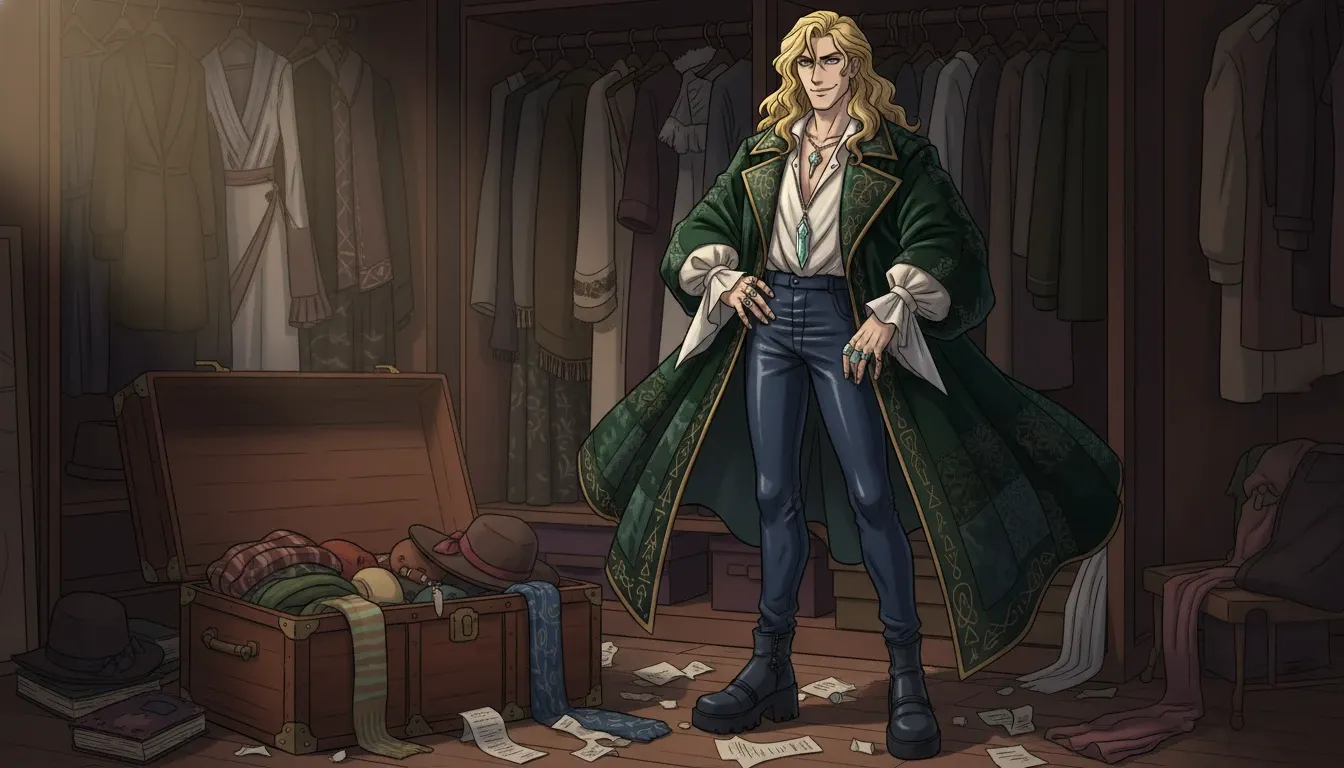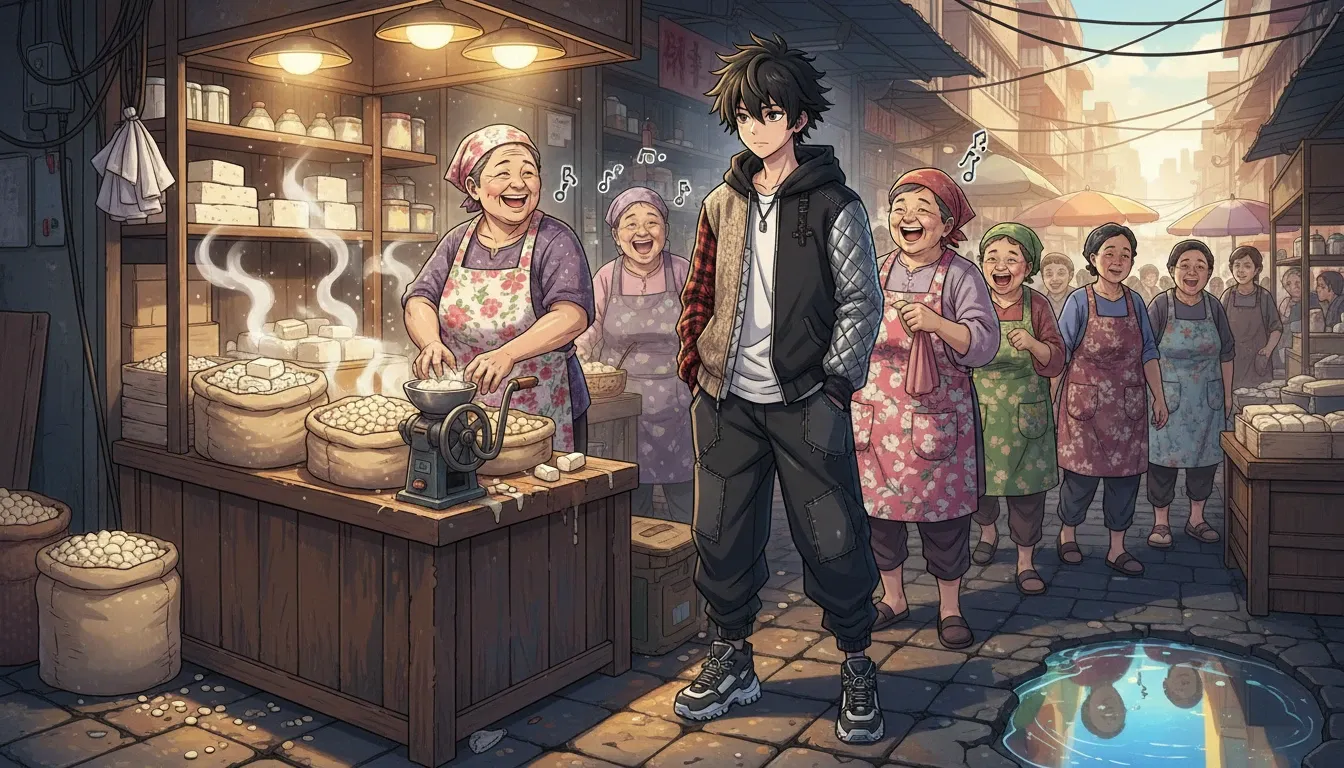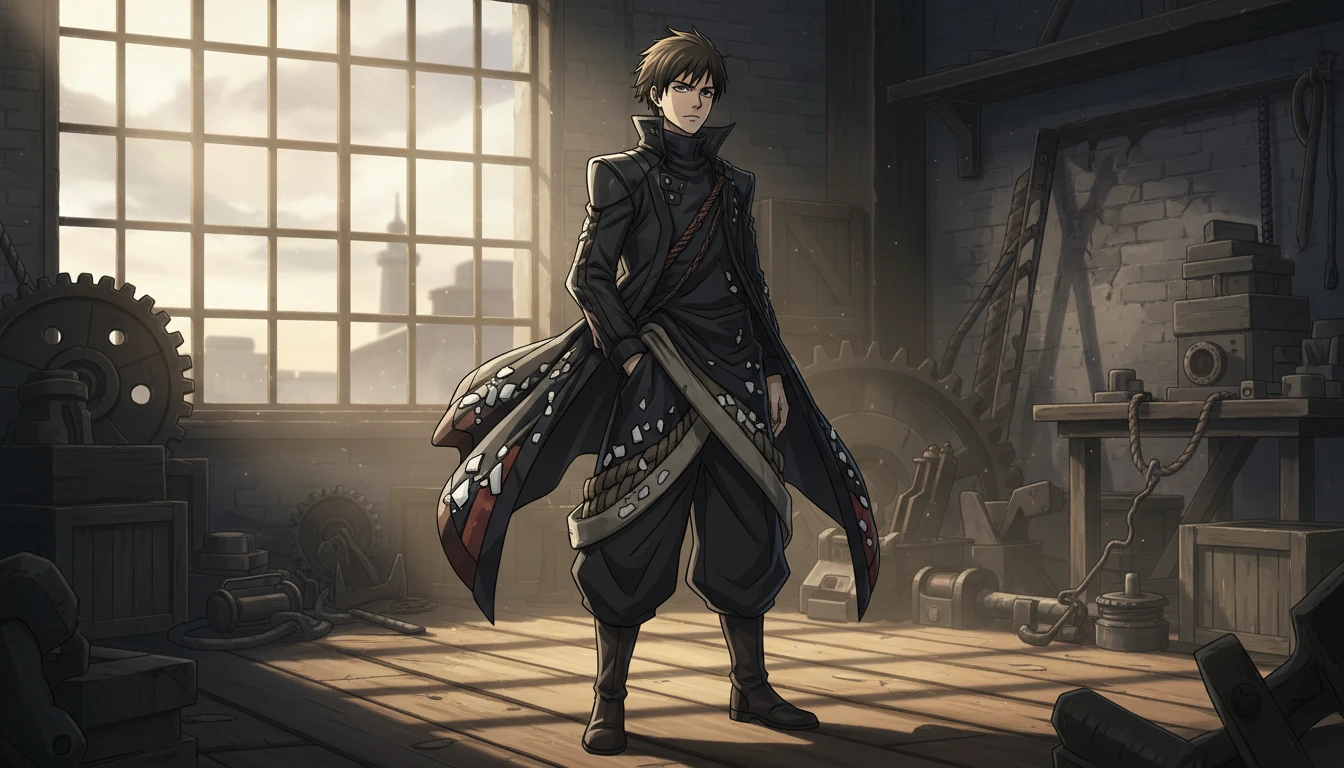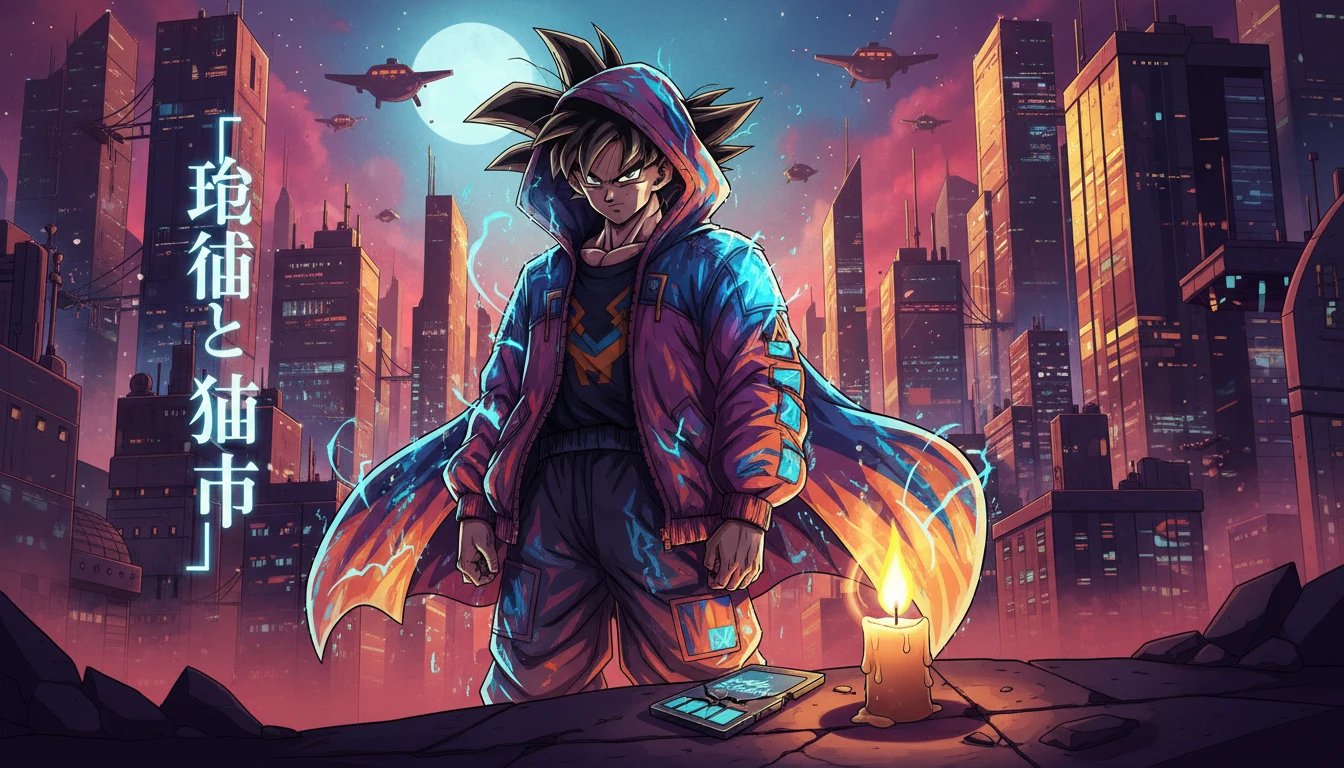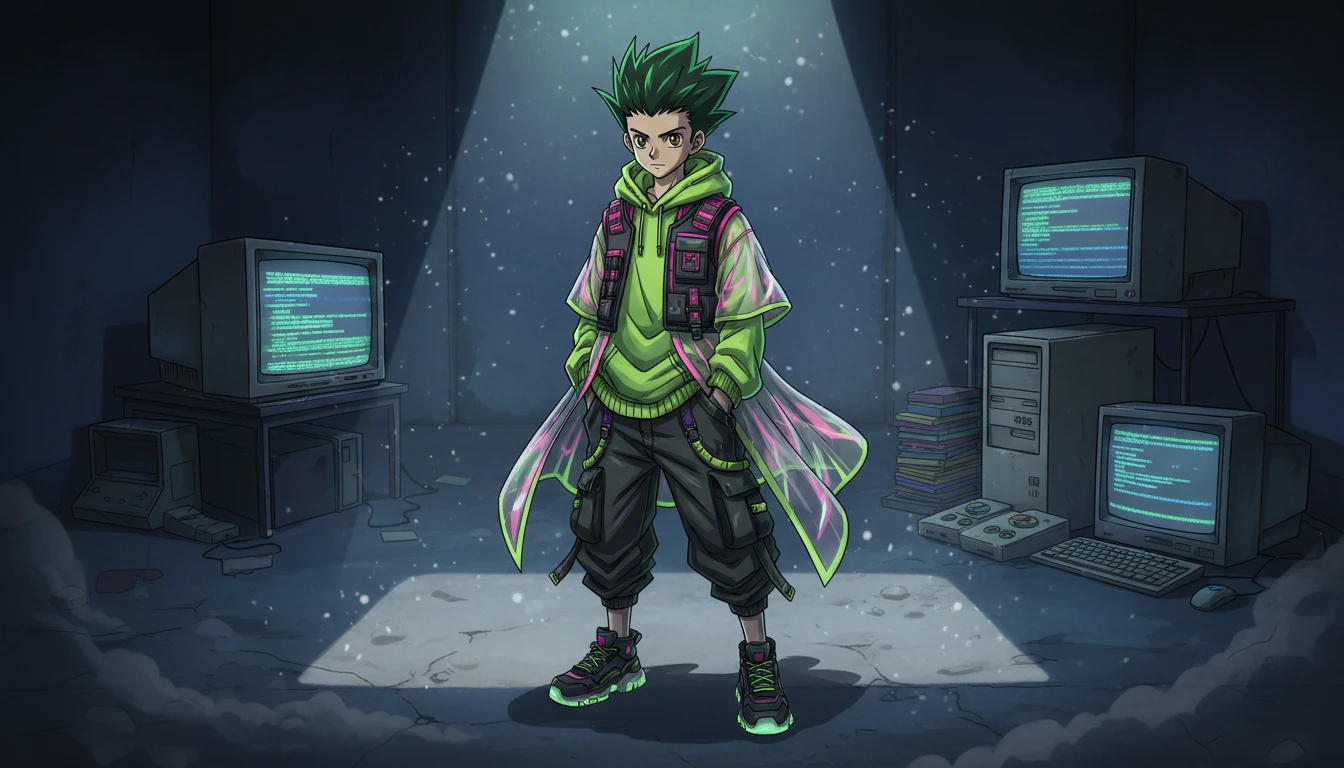
A fusion of Gon Freecss from Hunter x Hunter in streetwear, featuring an oversized hoodie and cargo pants, layered with an asymmetrical translucent organza overshirt and a sleeveless tech vest. Bold neon textures in acid-lime and electric pink, glowing in a dim, nostalgic museum filled with vintage tech. CRT light casting harsh shadows, dust motes in the air, retro devices like a 486 tower and floppy disks in the background, creating a vivid contrast between the modern outfit and the old-school environment
The museum boots the way old bones wake: a click, a pause, a low mechanical sigh, then phosphor light pooling into green letters that refuse to be smooth. My visitors always think nostalgia is a filter you can toggle—sepia, scanlines, a cute little chiptune. They don’t see the actual labor behind an offline place like this: the dust that cakes under fingernails, the knuckles nicked on metal chassis, the heat of a CRT swelling the air until it tastes faintly of warmed plastic and ozone.
I run the museum alone, privately, stubbornly disconnected from everything modern. No network. No updates. No cloud. The machines are old enough to be forgiven for their slowness and respected for their honesty. A 486 tower that thrums like a refrigerator. A beige keyboard with keys shiny from a previous owner’s thumbs. A mouse that clicks with a tiny, tired cough. In the corner: a stack of floppy disks that smell like paper and iron filings, labels written in a cramped hand. Office suites with menus like wooden drawers. DOS games that greet you with two colors and a dare. The first chat interfaces—blocky windows where language feels like it’s being carved out of stone.
And then, in the middle of these extinct ecosystems, I hang a modern fantasy like a relic from a future tomb: Hunter x Hunter—Gon Freecss, streetwear fusion with avant-garde layers and bold neon textures. It doesn’t belong here. That’s why it fits.
Gon, to me, has never been just bright-eyed innocence. In my museum’s light—CRT light, harsh and sincere—he’s a kind of kinetic persistence. He’s the kid who runs until his lungs burn and then runs harder. Streetwear is often sold as attitude, but the real attitude is endurance: the way fabric lives through sweat, friction, weather, time. I imagine Gon’s hoodie not as merch but as equipment: cotton thick enough to bite back when you tug it, seams double-stitched like vows, cuffs stained darker where hands always return.
The streetwear base is the anchor, a familiar silhouette for visitors who otherwise flinch at monochrome interfaces. Oversized hoodie, cargo pants, high-top sneakers with scuffed toes. But above it I build the avant-garde, like layering operating systems on top of one another until the machine begins to speak in tongues. A translucent organza overshirt, cut asymmetrically so one side drapes low like a curtain caught in a draft, the other cropped sharp at the rib. Under that: a sleeveless tech vest with misaligned panels that overlap like open windows on a desktop—none of them centered, all of them insisting.
The bold neon textures come last, and they are not merely color. They are sound translated into pigment. Acid-lime gradients that feel like a dial-up handshake. Electric pink piping that recalls the border of an old chat box when someone pings you and the system flashes—LOOK HERE, SOMEONE IS ALIVE. Neon isn’t decoration; it’s a survival flare. In the museum’s dim rooms, those colors would look wet. They would glow as if charged, like the afterimage you see when you stare too long at a bright screen and then close your eyes.
I have a jar on my workbench filled with failed neon swatches—threads that looked perfect under LED work lights but died into mud under CRT glow. Visitors never see that jar. I keep it behind the tower I call “Cathedral,” the oldest machine I still run. If you open the jar, the threads smell faintly of dye, burnt sugar, and the starch of cheap manufacturing; it’s the scent of ambition that didn’t calibrate to reality. I learned that lesson the slow way: modern color is made to flatter modern light. Old light is less forgiving. Old light shows you your lies.
There’s also my tool. It looks like nothing: a stubby flathead screwdriver, the handle scarred and dulled, wrapped in a strip of bicycle inner tube because the original plastic cracked years ago. I never let it leave my pocket. It has a weight that reassures me more than any newer kit. I used it the first time I found the “museum” by accident—before it was a museum, when it was just an abandoned computer lab in a defunct training center. The locks were cheap. The hinge pins were tired. That screwdriver slid into a gap like a secret. I tell people I “curate” software. I don’t tell them I also rescue it, sometimes in the quiet way you rescue a stray animal: quickly, without witnesses, hands shaking a little because you know you’re not supposed to care this much.
Gon’s outfit in my mind is a rescue job too, but in reverse: it rescues the old from being only old. The avant-garde layers are my museum’s architecture translated into cloth. There’s the rigid geometry of early word processors—boxed margins, fixed columns—made into stitched rectangles on a jacket’s back panel. There’s the playful brutality of DOS game UI—big, unapologetic numbers—converted into oversized neon typography that doesn’t sit politely on the chest but snakes across the shoulder and down the sleeve. The text isn’t a slogan. It’s a system message. It’s the kind of thing you would see on a screen at 2 a.m. when you’ve pushed hardware too far:
NO RESTORE POINT
RUN ANYWAY
I like those words because they are true, and because Gon would. He doesn’t get to rewind. None of us do. In the museum, you can load an old save file, yes—watch a pixelated character return from the dead, watch a document reopen exactly where it was. But your hands still age. Your eyes still tire. Your breath still fogs the glass in winter.
Sometimes, after the last visitor leaves, I sit in the chatroom exhibit. It’s a recreation of a late-90s interface—gray background, tiny avatars, a list of names that feel like ghosts waiting for someone to type. The keyboard clacks like rain on a tin roof. When the museum is quiet, I can hear the building’s plumbing settle, the faint buzz of the fluorescent tubes, the CRT’s high whine at the edge of hearing. I keep an audio cassette in a drawer under the monitor—another thing no one knows about. The label is blank. If you play it, you’ll hear a boy’s voice reading the opening of a manual for an obsolete word processor, line by line, as if it were scripture. “To save your document…” he says, carefully, the way you talk when you’re teaching someone not to drown.
That voice is mine, from the year before everything went wrong. I recorded it for my father when he started forgetting steps—small ones at first, then whole sequences, like a program losing its libraries. I never told anyone because I don’t want pity contaminating the room. But sometimes I play it anyway. The tape hiss feels like fabric rubbing against skin. The voice is eager and steady, and it hurts in a clean way, like cold air in lungs.
This is why Gon’s streetwear fusion matters to me. It’s not cosplay; it’s a blueprint for how to carry brightness through harsh systems. The hoodie is the child’s armor. The cargo pockets are the museum’s drawers—full of cables, adapters, little compromises you learn to make when the world won’t meet you halfway. The avant-garde layers are the parts that don’t “make sense” to outsiders: a half-skirt panel that flutters behind the leg like a torn banner, straps that connect to nothing obvious, a sleeve that splits and rejoins as if it had been rewritten mid-story. Those are the seams of survival. Those are the patches applied at 3 a.m. because something vital refuses to boot.
And the neon—oh, the neon is the reason visitors stop pretending they’re above it all. Under CRT light, neon becomes tactile. It looks like you could scrape it off with a fingernail. It feels like licking a battery, like biting into a sour candy, like a sudden bass note in your sternum. It insists on being seen, even in a room devoted to fading things.
I watch people touch the exhibits when they think I’m not looking—fingertips grazing a floppy disk, a hand hovering over a trackball, someone tracing the edge of a plastic chat window as if it were a picture frame. They come for “digital archaeology,” but what they really come for is contact: proof that the past had texture, that it resisted, that it demanded the body.
Gon would understand that. He would run his thumb along the seam of a jacket and feel where it was reinforced. He would grin at neon text that screams too loudly because he’s never been afraid of loud. He would wear asymmetry like a dare. He would step into my museum and, without pity or irony, treat these extinct softwares as living trials—things you learn from, things you sweat through.
When I lock up for the night, I kill the lights and the museum goes black except for the last lingering glow of a monitor cooling down. The afterimage hangs in the air like a neon thread pulled taut. I slide my scarred screwdriver into my pocket out of habit, as if I might need to open another door. Behind me, the jar of failed swatches sits unseen, and the blank-labeled cassette rests in its drawer, keeping its small secret.
Outside, the modern world streams and scrolls without me. In here, the old machines hum like sleeping animals, warm and stubborn. And in that hum, I can almost feel the outfit I’ve built for Gon—streetwear grounded in grit, avant-garde layers like misremembered architecture, neon textures flashing like system messages—asking the only question worth asking in any era:
Will you run anyway?