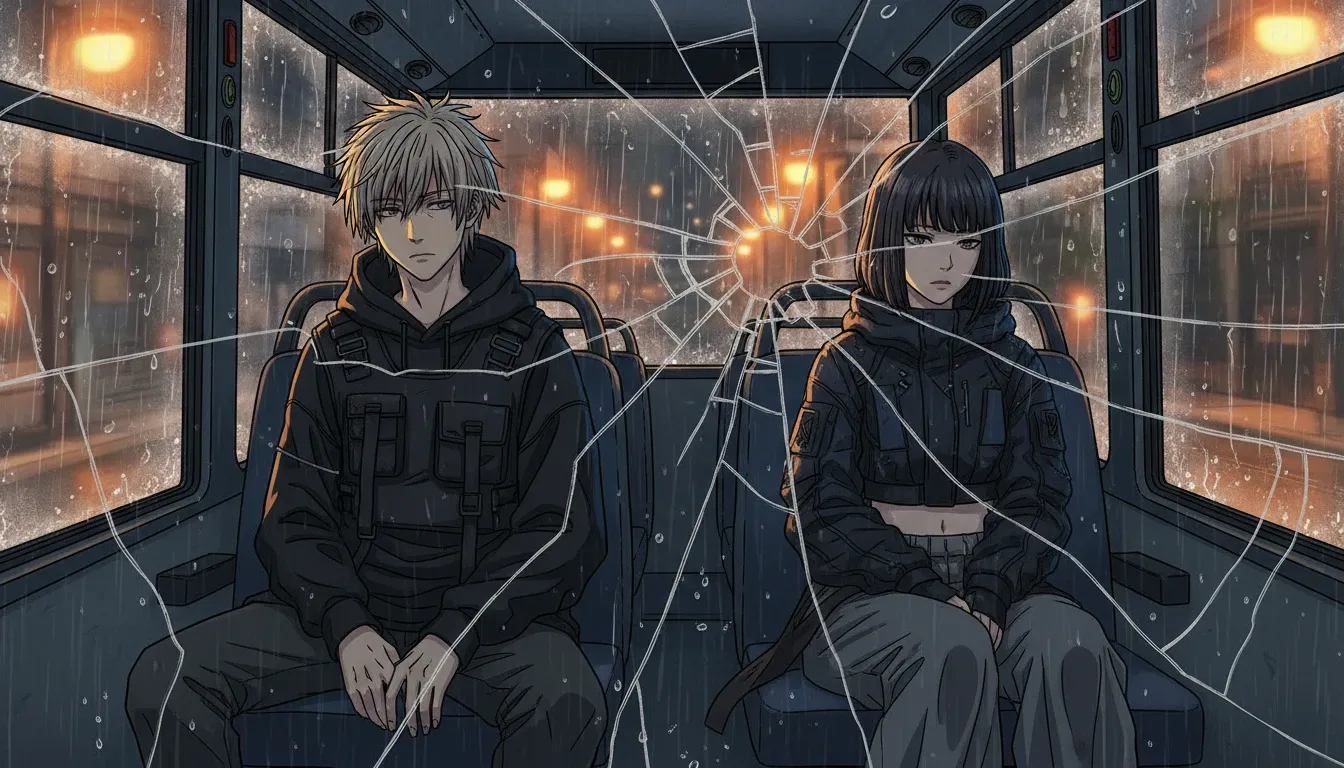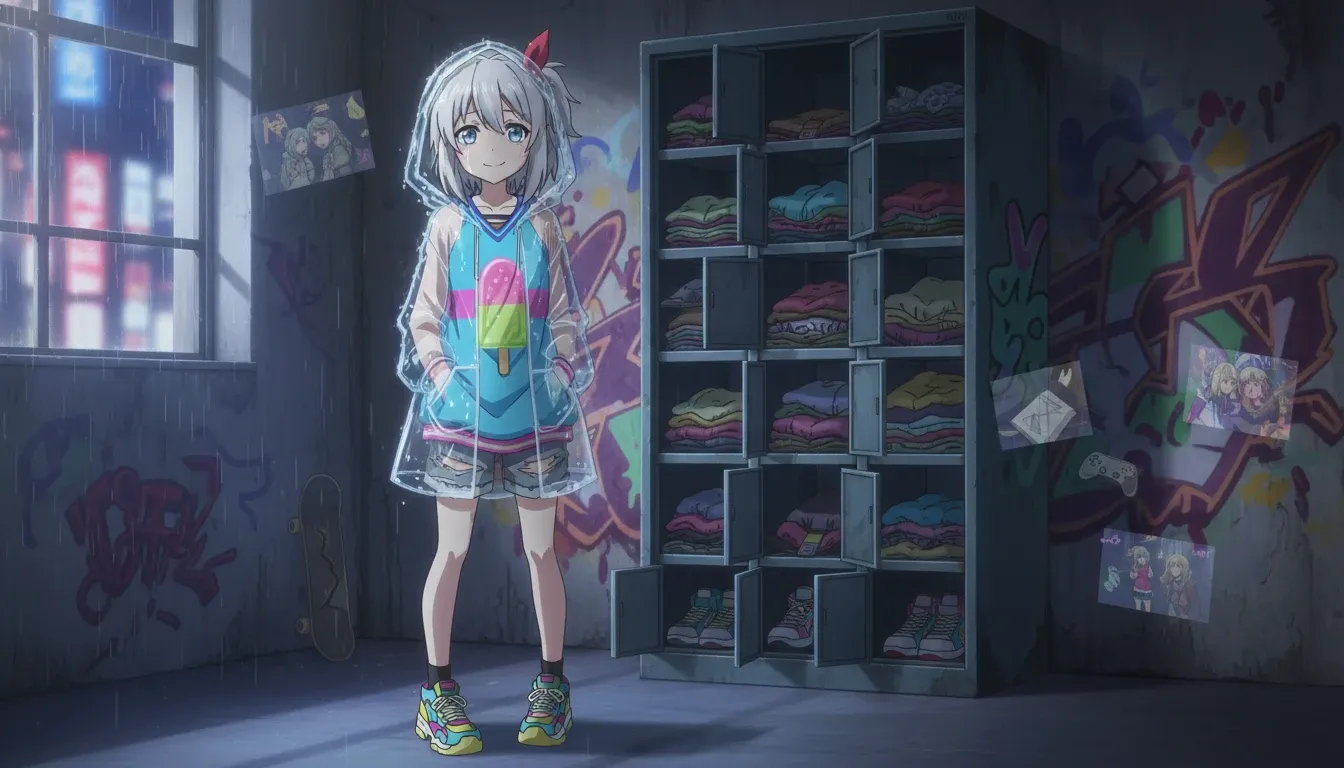
A streetwear remix of Edward Elric from Fullmetal Alchemist, featuring avant-garde layered styles. Blend vibrant reds and metallic tones, highlighting textured fabrics like worn leather and soft cotton. Set against an urban backdrop, capturing the essence of a bustling city. Include intricate details: asymmetrical cuts, visible stitching, and an edgy atmosphere, with dynamic shadows and light play. Incorporate elements of nostalgia and resilience, evoking a sense of movement and depth
I have a studio that resembles an atelier for streetwear—that is, if you don’t mind shelves holding something other than fabric. My shelves aren’t stocked with cloth but with hours: sealed air, labeled like coordinates—“summer rain trapped under a tin eave,” “the slow release of plastic scent from a new record in the stairwell,” “the warm metallic breath of a vending machine at 2:17 a.m.” I read them with my nose, like others read pencil notes in margins.
He plays recorded city sounds: the clatter of a sanitation cart’s dustpan in the early morning, the rhythmic thud of a noodle shop’s rolling pin in the afternoon, the bubbling of oden in a convenience store late at night. He calls it the city’s breath. What a romantic notion—the city breathing. But I need to pause—right now, I’m looping a single track in my headphones, actively shutting out all “breath.” We create technology to capture reality, then use it to escape reality. It’s such a... dull cycle.
So perhaps these bottles of mine are ultimately just a sound tomb dedicated to “disappearance.”
Tonight, I opened a sample I rarely show anyone. The label is simple, almost like a draft left behind after marketing copy has exhausted itself:
Edward Elric — Streetwear Remix / Avant-Garde Layered Vibes.
As the glass seal gives way, the first thing that rushes out is a clean heat—like a coin rubbed repeatedly between fingers until it starts to smell like itself. It’s not “a scent” so much as a set of clothes worn by the air: outer layers with visible stitching, inner layers with hidden linings, a posture that only makes sense in motion.
First layer: fabric warmed by urgent body heat. Not the warmth of home, but the kind from sleeves pushed up too many times, a hoodie used as a shield, as a bandage. The cotton has learned sweat but hasn’t yet surrendered to it. There’s a crispness of mineral salt, like shaking a white shirt hard in winter, the air snapping in response.
Then: metal, but not polished metal. It’s the scent of iron that has been argued over. The illusion of cold shavings resting on the tongue. A hint of ozone, like someone has just torn a page from a storm. If you’ve ever stood near a transformer box when the streetlights flicker, you know electricity has a smell—sharp, sterile, impatient. Edward wears it like jewelry. That chain isn’t an accessory; it’s a recurring verdict.
Deeper still: leather softened by friction. Not the “perfect leather” of boutiques, but more like a glove worn and aged by repeated handling: leather that remembers knuckles, remembers gripping. It smells faintly of smoked resin and the air of old workshops—small repair rooms where the floor forever absorbs machine oil, the ceiling forever absorbs smoke-filled time.
I don’t make “popular perfumes.” I’m more like someone building places that no longer exist—or worse: places that still exist but have been hollowed out. Edward’s streetwear remix is exactly that: the silhouette of a city after curfew, layered with the stubbornness of someone refusing to dress for a “world that’s winning.”
You might even “hear” its layers before you smell them. The outermost layer is loud—a coat swinging like a flag, a red that’s not romantic but arterial. Red has a smell too: not rose, not berry—but dyed wool drying in a cramped room, dampness, lanolin, the sharpness of a hint of vinegar from the fixative. It’s the scent of fabric forced to hold onto color.
Beneath the red, the remix becomes more “technical”: straps, fasteners, panels that don’t quite mirror each other. I love asymmetry because the body itself is asymmetrical: you always rely more on one nostril to breathe, your heartbeat is never perfectly centered. Edward’s layering isn’t decoration; it’s an argument with balance—one hem cut short prematurely; one sleeve looking twice-mended. The scent follows: newly cut threads carry a papery fuzz; the slight scorch from an iron held too long, like toast forgotten for three seconds.
Some details outsiders can’t grasp. You have to stay where “the story sweats,” not where “the story poses.”
One. Once—for a time too brief for anyone to give it a headline—a small parts shop you’d grown used to relying on closed down. Not a dramatic “factory shutdown,” but more like a series of quiet failures: the kiln cracked, the resin diluted with water, the apprentice left for the city. Then one day you pass that alley and suddenly realize: the air has lost that warm brass sweetness, that prick of flux. In its place are damp cardboard and dust—like a missing tooth. Those who depended on it didn’t take to the streets in protest. They learned to dismantle, to improvise, to grind bolts that didn’t belong into something “good enough.” When a system collapses completely, the choices are rarely heroic; they’re usually more practical, more bitter: do you become someone who adapts, or someone who shatters from loyalty…
Two. Once, in the hidden compartment of a tailor’s drawer—the kind you only learn about after years of trust—I saw a small notebook listing “repairs that must never be seen.” That wasn’t aesthetics; it was dignity: a sudden switch in thread color on the inside because the right spool ran out; a patch placed exactly where the ribs expand because the wearer needed to breathe in secret. That’s what Edward’s layering is, if done right: the avant-garde isn’t about how strange it looks, but how precisely it protects.
Three. The most direct interrogation of “meaning” often doesn’t come from villains, but from the quiet room after you’ve spent everything. The kind of night where you lay your tools on the table and suddenly realize you can’t replace what you just broke. I know this scent: the empty chill after the alcohol swabs run out, the cold of steel, the powdery white of whetstone dust, underneath it all a trace of human scent: fear worn down to near-tasteless exhaustion. In such moments, people don’t say “I believe” or “I don’t.” They choose between two actions: folding the coat neatly, as if tomorrow still exists; or throwing it on the floor, like shed skin. In this sample of mine, Edward doesn’t fold. He keeps wearing the weight—that’s his choice.
The loudest version of streetwear is meant to be seen. Edward’s remix is meant to be seen while still moving. There’s a forward lean in the silhouette. The scent leans forward too: a nip of black pepper, like teeth crushing; a ginger’s fire, like a freshly split knuckle; then a hint of winter ointment’s green—not healing green, but “pain-managed” green. It smells like pain being managed, not pain being romanticized.
When I made this “vibe,” I wasn’t chasing praise. I was chasing recognition—that moment when someone on the street halts mid-step because the air says: I know how much it costs to keep going.
In this formula, there’s a moment where sweetness tries to creep in, just as nostalgia always wants to sprinkle sugar over hard stories. I let it approach, but don’t let it settle: a shadow of caramel—more like the browned edge of something fried too long when hungry or rushed. That’s not dessert; it’s survival. Then I cut it off with a colder note: paper ash. Like library pages held too close to flame. Like the idea that “once knowledge is treated as power,” it always ends up carrying a hint of smoke.
I keep smelling my own wrist, like checking a watch when unsure of the time. The scent is still there, layered like clothing: the damp steam of red wool, workshop iron, leather’s memory, electric air. It also leaves an afterimage: a hint of almost childlike soap scent, like hands scrubbed too hard. That clean feeling when you can’t take something back, so you at least want to erase the feeling it left on you.
In my archive, “Edward Elric — Streetwear Remix / Avant-Garde Layered Vibes” is tucked between two other bottles: one labeled “Platform after rain, the heat and chill the moment train doors open,” the other “A boy’s room, after the last toy is put away.” That’s where it belongs.
Not because it’s fashionable.
But because it’s a specimen: a body insisting on being a body—heavy, bright, stitched, worn, still moving forward. Metal scent on the hands, the stubborn warmth of fabric against the throat. As for whether this warmth can carry someone to the next stretch of road…
I don’t know either. Do you?