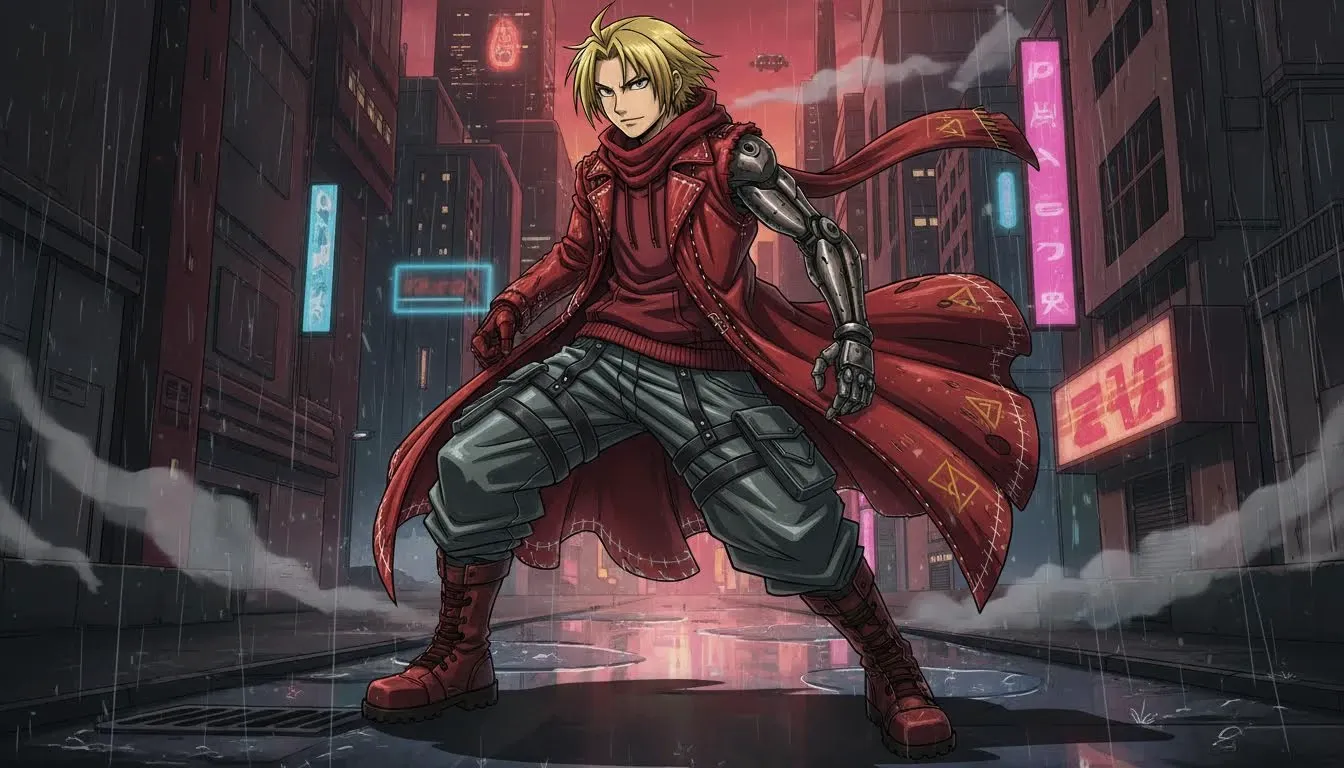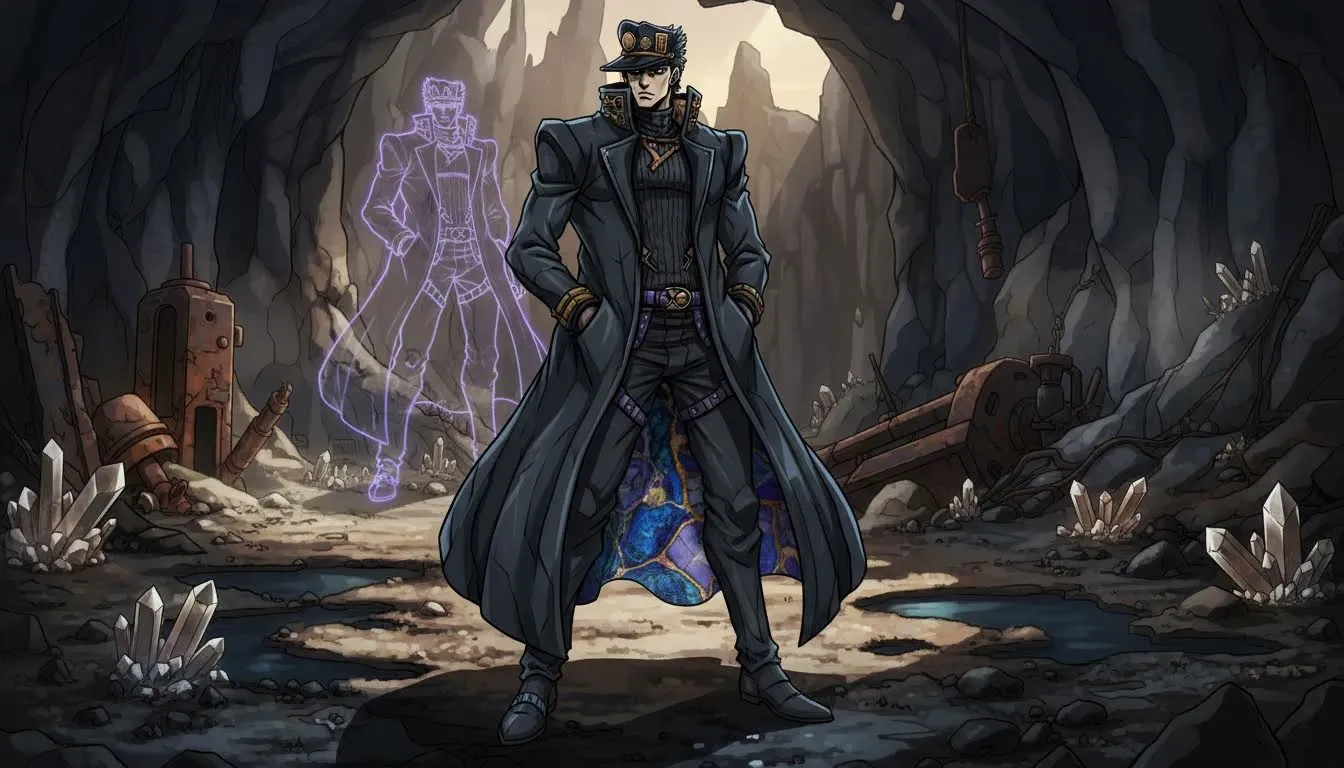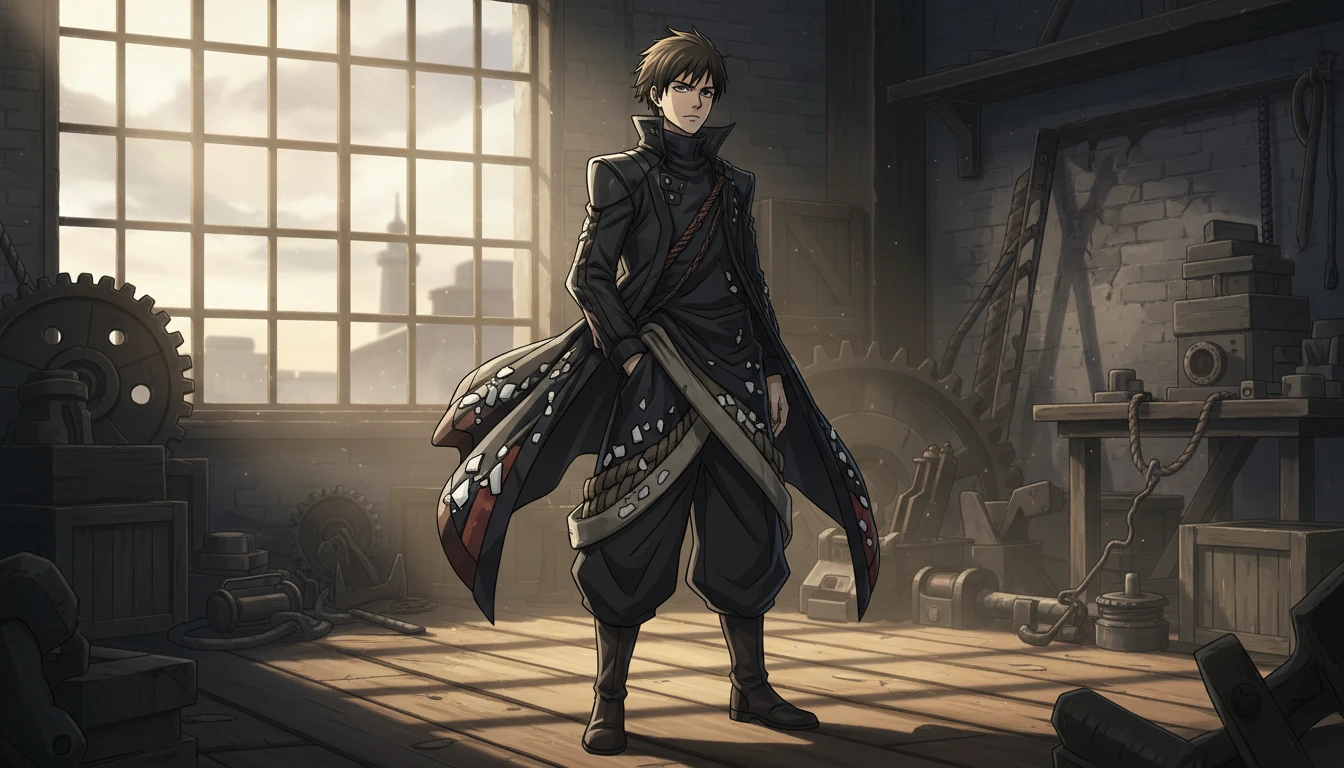
Eren Yeager in avant-garde streetwear, futuristic silhouette with bold layers, asymmetrical jacket resembling armor yet fluid like cloth. Sculptural shoulders, high collar with intentional notch, layered panels representing wreck site stratigraphy. Textured fabrics: matte nylon, warm knit, river silt, lacquered wood, rope fibers, porcelain shards. Dockside workshop ambiance at dawn, soft light, shadows playing on worn surfaces, a sense of repair and identity, melding anime character with realistic environment
The dock never truly sleeps. Even at dawn, before the cranes start their slow neck-stretching, the air around my workshop is already working—river-brackish on the tongue, diesel-bitter in the back of the throat, wet rope and old iron sweating against the skin. When I open the corrugated door, the hinges complain like a tired gull, and the first thing I do—before the kettle, before the lights—is touch the porcelain.
Not whole porcelain. Never whole.
Shards, lifted from the Yangtze’s dark palm: rims like broken moons, belly fragments glazed the color of winter pears, foot rings still holding a faint ring of silt where the river once pressed its thumb. I wash them in distilled water warmed to body temperature, because cold shocks old clay the way sudden grief shocks a chest. The fragments click softly as they meet the sponge—high, nervous, like teeth.
Some people think restoration is a kind of erasing. Making the past tidy, obedient, displayable.
Mine is the opposite. I repair, yes, but I also listen for what doesn’t want to be smoothed over: the scrape marks on a bowl’s underside that tell me it lived stacked and hurried; the pinprick bubbles in a Qing-blue glaze that whisper of a kiln running too hot because the shipment had to move; the way a cup’s lip is worn not evenly, but on one side—left-handed drinker, perhaps a deckhand who leaned into wind.
Each vessel is an identity. Not “artifact,” not “object,” but a frozen paragraph of shipping history—routes and hands and salt and accident held in fired earth. When I set two shards together and the seam aligns, it feels like matching vertebrae.
It’s in this language of seams and scars that I first understood Eren Yeager, not as a screaming silhouette on a poster, but as a body in transition—unfinished, contested, stitched to contradictions. And when I’m alone in the dockside light, when the river is low and the mudflats shine like bruised skin, I imagine him walking through my workshop in an avant-garde streetwear remix: bold layers, futuristic silhouette, asymmetry that refuses to apologize.
I can’t stop thinking of it in terms of repair.
A jacket that behaves like armor but moves like cloth: sculptural shoulders offset, one side rising like a prow, the other collapsing into a drape as if the fabric remembers water. A collar cut high enough to frame the jaw, but with a notch that interrupts the clean line—like a restored crack left visible on purpose, kintsugi without gold, just an honest seam. The kind of garment that declares: I have been broken in public and I am still walking.
In my world, the boldest restoration choice is often what you don’t hide.
So Eren, in this remix, wears his history on the outside: layered panels that echo the stratigraphy of a wreck site—river silt, then lacquered wood, then rope fibers, then porcelain. Fabrics that change temperature under the palm: matte technical nylon on top, cool as a wet hull; beneath it, a knit that holds warmth like a sleeping animal; beneath that, a lining that almost sticks to sweat, reminding you you are alive, you are trapped in skin. The silhouette is futuristic not because it’s clean, but because it’s engineered—seams placed like decisions, pockets placed like regrets.
The asymmetry is the point. Symmetry is a museum lie.
One sleeve is longer, ending in a cuff that folds over the knuckles like a bandage. The other is cropped, exposing the wrist—vulnerable, a pulse you can see if you watch. One pant leg is straight and severe, the other gathered with a strap as if tied down for work on deck. There’s a harness line across the chest that looks decorative until you realize it’s functional, able to clip to something unseen—an anchor point, a promise, a restraint.
I know restraint. I keep mine in a rusted biscuit tin under the workbench, behind the jars of pigments. Inside is my old bone tool—ox scapula, hand-filed, the edge polished by years of sliding under shards to lift them without chipping. I never lend it, never leave it behind. The apprentices think it’s superstition. It’s not. The tool belonged to my teacher’s teacher, a man who repaired porcelain during flood seasons and used the same scoop to lift drowned fish out of his workshop drain. The handle still carries a faint oil smell that no solvent removes—human skin, tobacco, river water. When I’m fitting a fragment that refuses to sit, I press the bone against it, and the piece behaves, as if it recognizes an older patience.
Eren’s outfit should have that kind of inherited stubbornness. Not sleek futurism, but futurism with fingerprints.
Picture the surface details like glaze defects you only notice after hours: micro-pleats that catch light in narrow, sharp lines, like ripples on the Yangtze at midday; laser-cut vents shaped not as perfect circles, but as irregular, shard-like apertures; stitching that changes direction abruptly, refusing the comfort of continuity. Bold layers, yes—but each layer has its own weather. Under harsh neon, the outer shell reads as black. Under dock floodlights, it reveals deep green undertones, the color of algae on old timbers.
And then there’s the weight.
Streetwear is often described in images, but weight is what decides whether you can breathe. A good garment has gravity that sits on the shoulders like responsibility. I imagine Eren’s remix coat heavy enough to make him aware of each step, but balanced so it doesn’t drag—like carrying a crate on a heaving deck, knees learning the rhythm of risk. The hem is irregular, longer at the back, like a cloak cut by someone in a hurry. It snaps against the calves in wind, a constant reminder: motion, motion, motion.
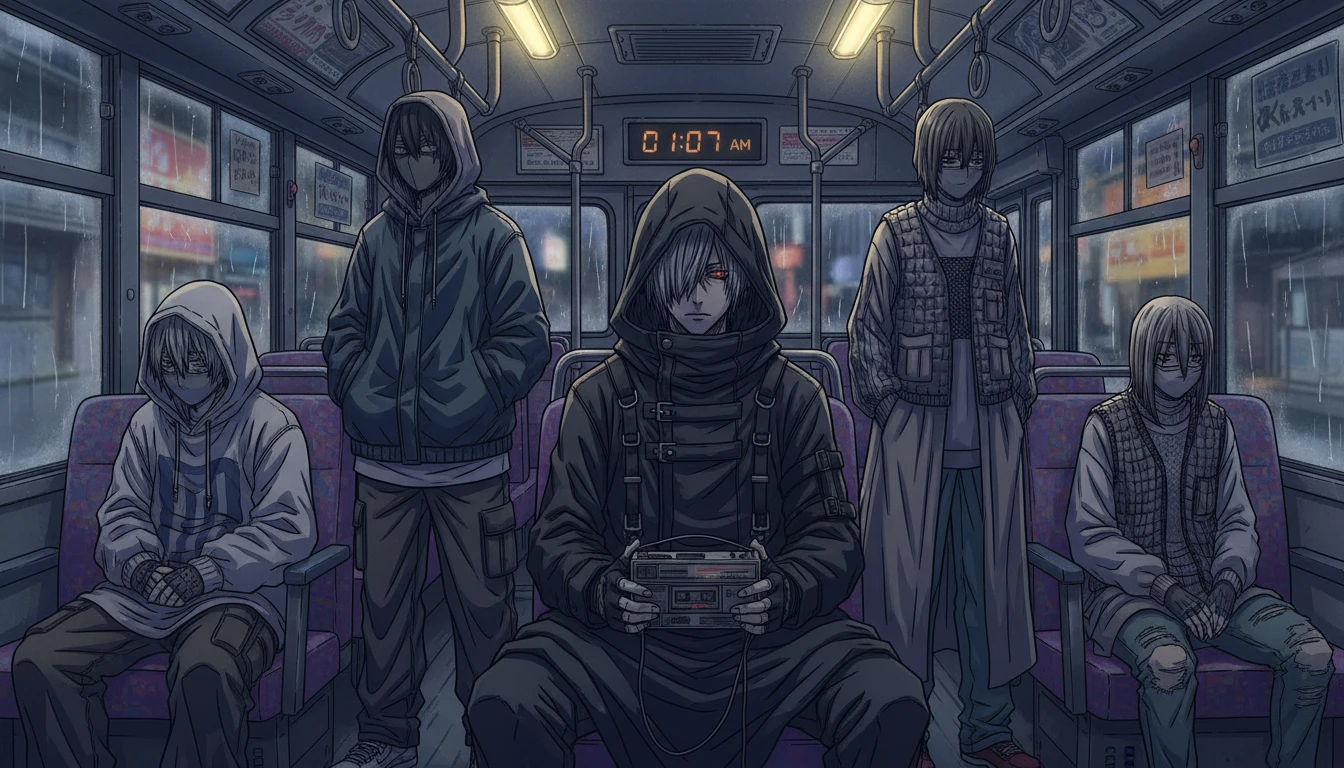
Some nights, when I’m aligning shards, I play a recording I’ve never told anyone about. It’s not music. It’s the voice of a river pilot, captured on a battered microcassette I found sealed inside a ceramic jar that had somehow survived a wreck. The jar was a crude container, not meant to be precious—thick walls, uneven glaze. But inside it, wrapped in oilcloth, was this tape. I cleaned it with trembling hands, dried it, and when I finally coaxed sound from it, the voice came through like a ghost coughing up mud.
He’s describing fog. Not poetic fog. Working fog—the kind that wets your eyelashes and turns lanterns into smeared halos. He mentions a bend near a sandbar that “moves every season like an animal changing its mind.” He lists cargo without emotion: rice, tea, ceramics, cloth. Then, very quietly, he says a name. Not his own. Someone he lost. The tape cuts out after a scrape, as if the river itself reached in and pressed stop.
I don’t know why I keep it secret. Perhaps because once you admit you’re listening for the dead, people start expecting you to perform grief. I only want to hear it in private, like pressing an ear to a repaired bowl and imagining the old warmth of soup.
Eren, too, is full of private recordings—things that play behind the eyes when the world expects only rage. That’s what avant-garde streetwear can do when it’s honest: it becomes a portable interior, a way to carry your unspeakable audio as architecture around the body.
In the corner of my workshop is a wooden crate I never open when anyone is here. It’s labeled, in my handwriting, “Silt.” Inside are my failures: bowls repaired too perfectly so they feel dead; plates whose seams were aligned but whose spirit is wrong; a ewer that looks whole until you notice the spout sits a millimeter too proud, like a tooth out of place. I keep them because they teach me humility. They teach me that repair is not domination—it’s negotiation.
If Eren’s remix were mine to make, I’d build failure into it on purpose—not sloppy, but deliberate. A panel that doesn’t lie flat, a strap that hangs like an unfinished sentence, a raw edge sealed only enough to prevent fraying. Not because “deconstruction” is fashionable, but because a life like his can’t be tailored into neatness. The future silhouette must admit the past’s roughness.
On the dock, the light changes by the minute. Sun on water is a blade; sun behind cloud is bruised linen. When I hold a restored bowl up, the glaze catches and releases brightness like breathing. I imagine the same with fabric: reflective threads woven sparsely through matte cloth, so the garment flickers when Eren moves—like fish scales turning in the river, like lantern light jumping across wet boards. Futuristic doesn’t mean chrome. Sometimes it means learning how to make darkness shimmer without becoming spectacle.
I’ve seen shards that tell of routes without maps: a certain cobalt that only appeared when a kiln in Jingdezhen ran short and substituted pigment from a smaller supplier; a foot ring cut in a style typical of one county, but the clay body from another—evidence of rushed production to meet a departure window. The river is a conveyor belt of compromises.
Eren’s outfit, then, should be a map of compromises: streetwear stitched with military logic, rebellion cut with discipline. A hood that can fold into a structured collar; a scarf that looks like softness but hides a stiffened edge; boots that seem heavy but have a sole engineered for silent grip. Bold layers that can be shed, reconfigured, turned into something else mid-stride—because on a ship, on a battlefield, in a life, you rarely get to stay in one form.
When I finish a repair, I don’t polish it into oblivion. I rub it gently with a cloth, feeling for unevenness the way you feel for a scar under skin—proof of healing, proof of damage. The river outside keeps moving, indifferent, carrying new wrecks toward old mud. I lock the workshop, and the metal latch is cold enough to sting.
If Eren Yeager walked past the dock in that avant-garde remix—bold layers, asymmetry, futuristic silhouette—I think I would recognize him not by his anger, but by the way his clothes would behave like repaired porcelain: holding together under tension, refusing to pretend they were never fractured, making a body into a vessel that can still carry something across dangerous water.
And perhaps that is what I do here, day after day: not rescuing objects, but restoring the possibility of passage.